HealthJune 2026
Pilates for Back Pain
Clinical research meets practical guidance on using Pilates to address chronic lower back pain.
Read → 10 min read
Updated June 2026 · 11 min read
Hip pain is one of the most common reasons people seek out Pilates — and for good reason. The method's emphasis on deep hip stabilisers, glute strength, and movement quality addresses many of the underlying causes of hip discomfort. But Pilates is not a uniform solution. The right approach depends entirely on what is causing the pain, and the wrong exercises can aggravate rather than relieve it.
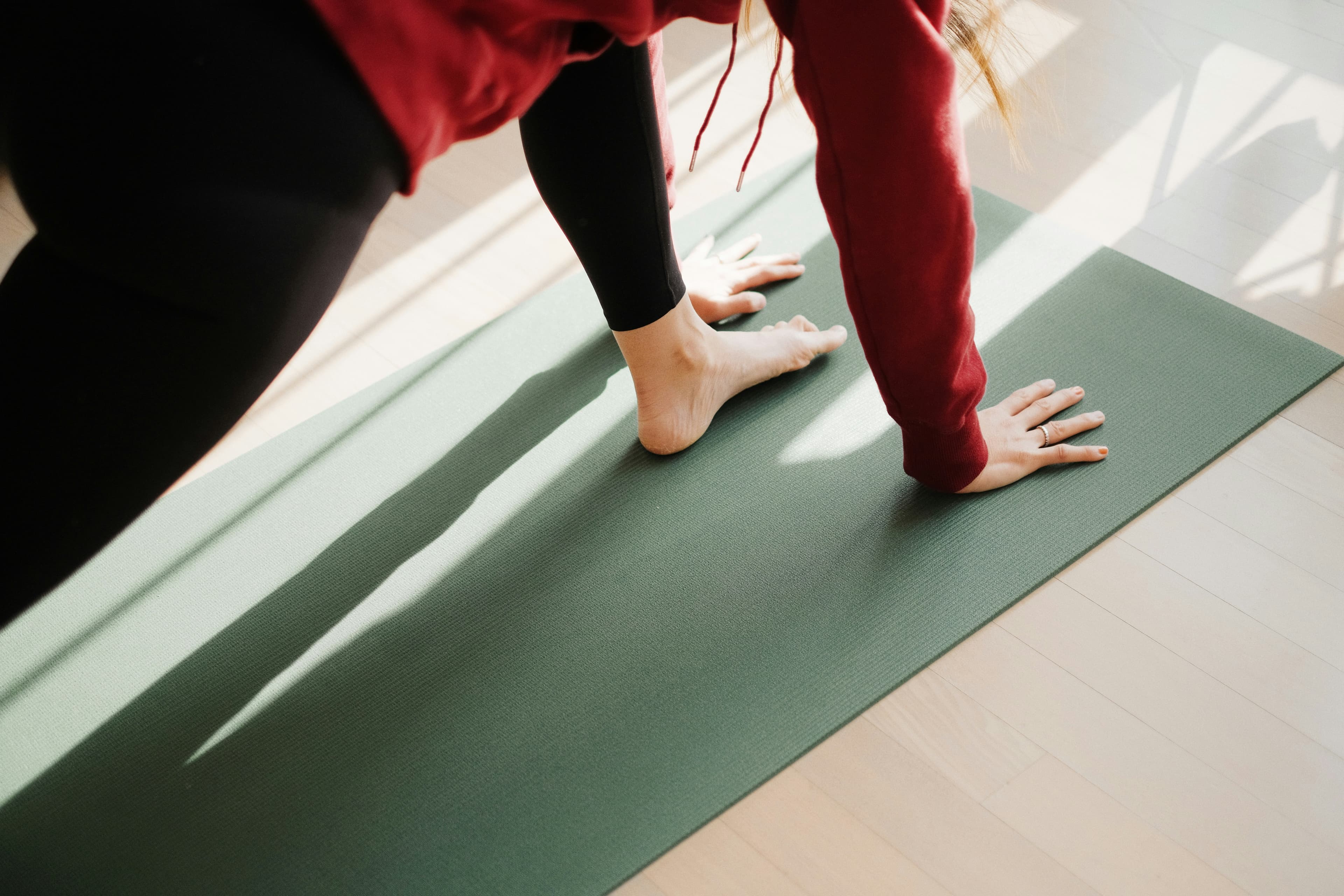
Hip pain presents differently depending on its origin, and this distinction matters for choosing the right Pilates approach. The most common types in active adults and those with sedentary lifestyles each respond to different exercise strategies.
Hip flexor tightness / anterior hip pain
Usually located at the front of the hip and groin, often worse after prolonged sitting. Caused by shortened psoas and iliacus from desk-based work or repetitive hip flexion (cycling, running). Pilates extension work — swan prep, swimming, hip hinges — combined with hip flexor lengthening addresses this directly.
Greater trochanteric bursitis (lateral hip pain)
Pain on the outside of the hip, often worse when lying on that side or crossing the legs. An inflamed bursa needs load management first — aggressive stretching and high-load exercises make it worse. Gentle Pilates glute work in pain-free ranges, particularly non-weight-bearing side-lying exercises, is the appropriate starting point.
Hip impingement / FAI (femoroacetabular impingement)
A pinching sensation in the front of the hip at end range of flexion or internal rotation. Common in active people and former athletes. Pilates can help but requires significant modification — exercises that force deep hip flexion must be avoided. Focus on posterior chain, hip external rotation, and core stability.
Hip osteoarthritis
Aching, stiffness, and reduced range of motion — typically in those over 50. Exercise is a first-line treatment recommendation from both the NHS and NICE guidelines. Pilates is well-suited because it loads the joint without impact, and the controlled range of motion helps maintain mobility.
Labral tear
A tear in the cartilage ring (labrum) around the hip socket — causes clicking, catching, and deep aching. Moderate-to-severe labral tears are typically managed surgically before returning to exercise. Minor labral irritation can often be managed with a physiotherapy-guided Pilates programme that avoids provocative end-range positions.
These exercises are appropriate for most hip pain presentations and form the foundation of a Pilates-based hip rehabilitation and strengthening programme. Perform all exercises within a pain-free range — mild discomfort is acceptable, sharp or pinching pain is not.
Clam (side-lying)
The most targeted glute medius exercise in the Pilates repertoire. Lying on your side with hips stacked, knees bent at 45°, you open the top knee while keeping the feet together. Move slowly with control — the movement comes from the hip, not the waist. 15 repetitions each side. Add a light resistance band around the thighs to progress.
Bridge
Lying on your back with feet hip-width apart, you lift the pelvis into a straight line from knees to shoulders. This loads the glute max and hamstrings — the muscles most likely to be underactive in hip pain presentations. Single-leg bridge (one foot hovering) is a significant progression. Avoid if you have anterior hip pain that worsens with hip extension.
Side-lying hip abduction
From a side-lying position with a long body line, you lift the top leg to hip height with a slightly internally rotated femur. This loads the gluteus medius and minimus directly — the lateral hip stabilisers that are most commonly underactive in hip pain. Avoid if the movement provokes lateral hip pain (bursitis).
Hip hinge / standing glute work
A standing hip hinge — bending forward from the hips with a neutral spine — develops the posterior chain strength that protects the hip joint under load. Performed with a resistance band around the hips, it directly teaches the hip extensor pattern that sitting inhibits. This is one of the most transferable exercises to daily movement.
Supine hip flexor stretch
Lying on your back, you draw one knee to the chest while allowing the other leg to extend along the floor. The degree to which the extended leg rises indicates psoas tightness (a positive Thomas test). Hold 30–60 seconds. This is appropriate for hip flexor tightness but should be modified or avoided for impingement presentations.
These classical Pilates exercises are provocative for many hip pain conditions and should be avoided or significantly modified until assessed by a qualified professional.
A small selection of inexpensive tools makes at-home hip Pilates significantly more effective.
Fabric resistance bands
For clam and hip abduction progressions
Shop on Amazon →
Foam roller
TFL and hip flexor release pre-exercise
Shop on Amazon →
Pilates ball (25cm)
Inner thigh and adductor activation
Shop on Amazon →
Non-slip mat (6mm+)
Cushioning for side-lying and supine work
Shop on Amazon →
*Affiliate links — we earn a small commission on qualifying purchases at no extra cost to you.
Is Pilates safe for hip impingement (FAI)?
Pilates can be safe and beneficial for femoroacetabular impingement (FAI), but specific modifications are essential. Exercises that force deep hip flexion — such as double-leg stretch and open-leg rocker — should be avoided or significantly modified. The focus should be on posterior chain strengthening (glutes, hamstrings), hip external rotation, and lateral hip stability. Work with a Pilates instructor who has clinical rehabilitation experience, or a physiotherapist who integrates Pilates into treatment.
Can Pilates help with hip arthritis?
Yes — exercise is consistently recommended as a primary management strategy for hip osteoarthritis, and Pilates is well-suited to this because it loads the joint through controlled ranges of motion without impact. Studies published in the journal Arthritis Care & Research have found that supervised exercise programmes reduce hip OA pain and improve function. The key is to work within pain-free range and progressively build strength in the surrounding musculature.
How long does it take for Pilates to help hip pain?
Most people with muscular hip pain (flexor tightness, weak glutes) notice improvement within 4–6 weeks of consistent practice. Structural conditions like arthritis or labral tears may take longer — 8–12 weeks — and require modification of standard Pilates exercises. Acute hip bursitis should be assessed by a physiotherapist before beginning any exercise programme.
What equipment do I need for Pilates hip exercises at home?
A quality mat is the essential starting point. A small Pilates ball (23–25cm) is useful for inner-thigh and pelvic floor exercises. Resistance bands add progressive loading for glute and hip work. A foam roller can be used for hip flexor and TFL release before and after practice. All of these are available on Amazon for a combined outlay of under £60.
Equipment
Adequate density for hip and glute work in side-lying and supine positions. A firm, stable surface matters more than cushioning when hip mobility is the goal.
Shop on AmazonFor hip flexor, glute, and IT band release before Pilates sessions. Rolling the glute medius and piriformis before practice significantly improves the quality of hip-focused exercises.
Shop on AmazonMini loops for hip abductor strengthening — clamshells, side-lying leg lifts, and standing hip work. Light resistance builds the glute medius strength that reduces hip pain long-term.
Shop on AmazonInner thigh and adductor resistance to complement the abductor work — both sides of the hip need loading for balanced function.
Shop on AmazonFull-length roller for spinal mobilisation and thoracic work that complements hip-focused Pilates. Thoracic stiffness often contributes to hip restriction.
Shop on AmazonUse our curated city guides to find the best Pilates studios worldwide.
Explore City Guides →