HealthJune 2026
Pilates for Arthritis
Evidence-based guide to Pilates for arthritis — benefits, safe exercises, and how to modify for joint pain.
Read → 8 min read
Updated June 2026 · 9 min read
Fibromyalgia presents a genuine paradox for exercise: inactivity worsens symptoms, but exertion can trigger flares. Pilates, with its emphasis on slow, controlled movement, breathwork, and precise muscle engagement, sits in an unusually productive middle ground — enough stimulus to build strength and reduce pain sensitisation, with enough control to stay within individual tolerance. The evidence supports it clearly, and the practical question is not whether to do Pilates, but how to do it safely.
Medical note
Consult your GP or rheumatologist before beginning a new exercise programme with fibromyalgia. This guide is for general educational purposes only.
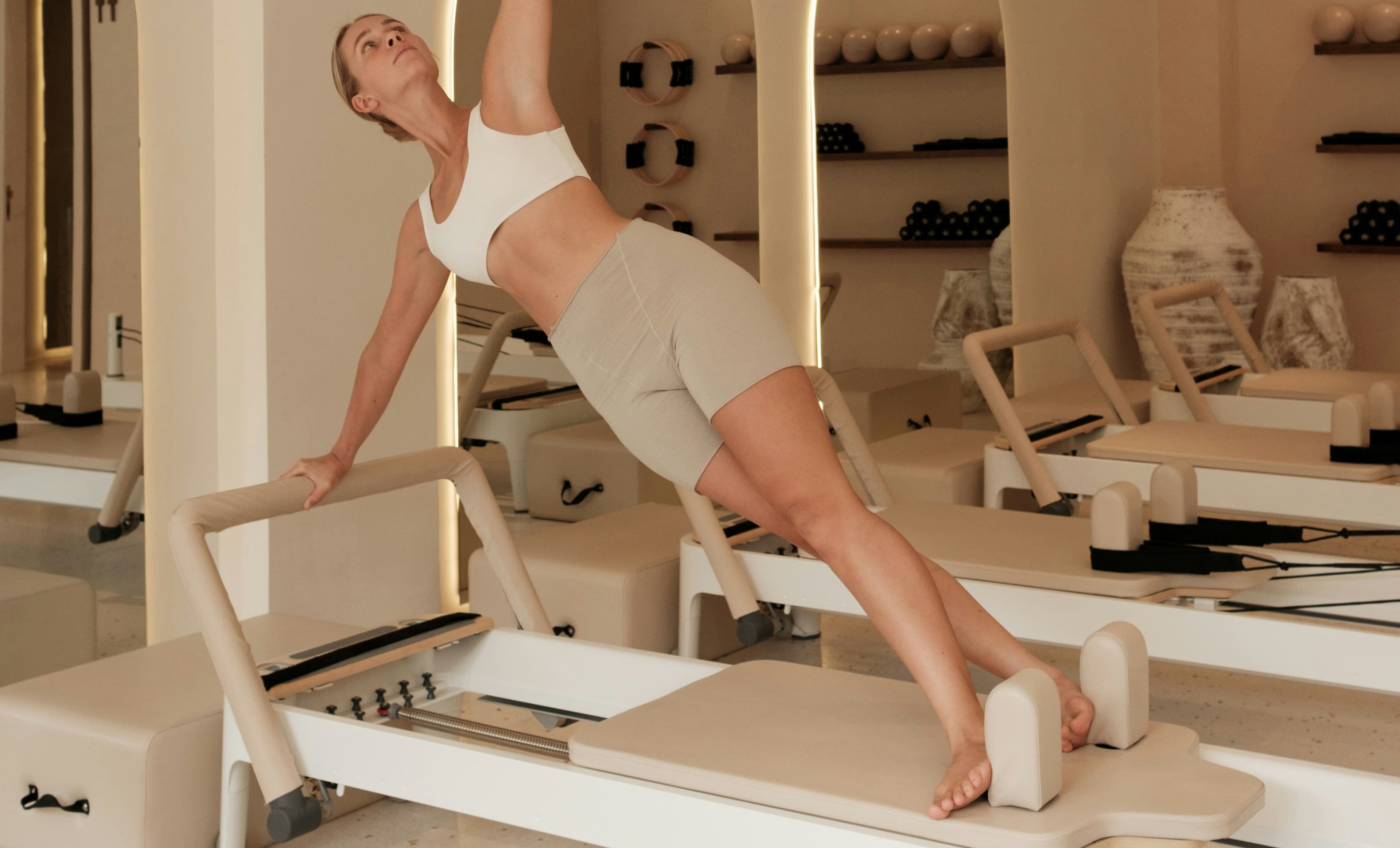
The research on Pilates and fibromyalgia has grown substantially over the last decade. The findings are consistently supportive:
A 2017 randomised controlled trial published in the Clinical Rehabilitation journal found that 12 weeks of Pilates significantly reduced pain intensity, fatigue, and depression in women with fibromyalgia compared to a control group.
Pilates improves sleep quality in fibromyalgia patients — a critical finding, since disrupted sleep is both a symptom and a driver of fibromyalgia pain amplification.
The proprioceptive and body awareness elements of Pilates training help fibromyalgia patients develop better movement economy — using less muscular effort for the same tasks — which directly reduces the energy cost of daily activity.
Unlike higher-intensity exercise, Pilates at appropriate intensity does not consistently trigger post-exertional malaise when the pacing principles described below are followed.
The breathing component of Pilates has measurable effects on the autonomic nervous system, reducing the sympathetic activation that characterises fibromyalgia's central sensitisation.
Fibromyalgia Pilates fails when people follow standard progression timelines. It succeeds when pacing is built into the structure from the start.
Start shorter than you think necessary
Begin with 15-20 minute sessions even if you feel capable of more. The fibromyalgia symptom response to exercise is often delayed by 12-24 hours, so feeling fine in session does not mean you have not exceeded capacity. Build session length only after three consecutive sessions with no next-day increase in symptoms.
Two sessions per week maximum to start
Three days between sessions is the minimum recovery interval when beginning Pilates with fibromyalgia. Many practitioners do best with Tuesday-Friday or Monday-Thursday scheduling that creates consistent recovery windows. Increase frequency only after six to eight weeks of stable response.
Work at 4-5 out of 10 perceived exertion
Fibromyalgia Pilates should feel gentle to moderate — never hard. The 'I could definitely do more' feeling at the end of a session is the correct target. Exercises should be performed with reduced repetitions and at a pace slower than the instructor cues if needed.
Know your flare protocol
On high-symptom days, have a modified 10-minute sequence ready: gentle spinal breathing, supine leg slides, seated shoulder rolls, and prone child's rest. Maintaining movement habit on difficult days prevents the deconditioning cycle that worsens long-term fibromyalgia prognosis.
These exercises are well-tolerated by most fibromyalgia practitioners and address the core deficits the condition creates — reduced core stability, muscle weakness, and movement avoidance.
Supine breathing
Trains the diaphragmatic breathing pattern that reduces sympathetic nervous system activation. The foundation of fibromyalgia Pilates — do this first and last in every session.
Knee folds (one at a time)
Gentle hip flexor engagement in a fully supported position. Develops core activation without the spinal loading of sit-up based exercises that fibromyalgia practitioners often cannot tolerate.
Leg slides
Slow, controlled leg extension in supine position. Builds hip stability and psoas strength without loading the painful areas most fibromyalgia patients identify — upper trapezius, neck, and lumbar spine.
Clam shells with light band
Hip abductor and external rotator strengthening in side-lying — a non-weight-bearing position that is reliably accessible during moderate fibromyalgia symptoms.
Seated spine twist
Thoracic rotation mobilisation that addresses the thoracic stiffness almost universally present in fibromyalgia. Performed seated with minimal loading, it is accessible on most symptom days.
Standing wall roll-down
Controlled spinal flexion with the support of a wall. Builds hamstring flexibility and spinal mobility without the uncontrolled loading of standard forward bends.
*Some links on this page go to Amazon. We earn a small commission on qualifying purchases.
A 10mm mat is one of the most important equipment choices for practitioners with fibromyalgia. The widespread musculoskeletal tenderness that characterises fibromyalgia makes standard 4-6mm mats genuinely uncomfortable for exercises that require lying prone, side-lying, or any position that places bony prominences against the floor. A 10mm mat provides enough cushioning to meaningfully reduce that discomfort without creating the instability that very thick foam can produce during standing or balance exercises. The Gaiam Essentials mat is a well-established option at a sensible price point — it provides adequate cushioning for most practitioners without the premium cost of specialist thick mats. For fibromyalgia, the investment in a thicker mat is not optional comfort — it is a prerequisite for consistent practice.
Shop on AmazonMyofascial release work with a foam roller is widely used in fibromyalgia management to reduce the muscular tension and tender points that define the condition. The critical consideration for fibromyalgia is pressure sensitivity — standard high-density foam rollers can be too painful for fibromyalgia flare periods. The LuxFit high-density roller is appropriate for practitioners in a stable phase of fibromyalgia who are building tolerance for myofascial work. Practitioners experiencing heightened sensitivity should start with a softer roller or apply pressure only to less tender areas, gradually building. Self-massage before a Pilates session — particularly to the upper trapezius, thoracic spine, and hip flexors — can reduce the body's pain response during exercise, making the subsequent session more productive and less uncomfortable.
Shop on AmazonResistance bands are ideally suited to fibromyalgia Pilates practice because they allow extremely fine control over load — something that dumbbells and reformer spring stacks cannot provide at the low end. On a high-pain day, using the lightest loop band (typically 5-15lb resistance) for side-lying clam shells, glute bridges, or standing hip abduction keeps the cardiovascular and neuromuscular benefits of exercise while keeping effort well below the threshold that triggers post-exertional malaise in fibromyalgia. The Fit Simplify set provides five resistance levels, giving practitioners the flexibility to self-adjust based on daily symptom variation — a critical feature for fibromyalgia, where functional capacity can vary dramatically day to day.
Shop on AmazonThe 18 defined tender points of fibromyalgia — located at the neck, shoulders, upper chest, elbows, hips, and knees — respond to targeted myofascial release work before and after exercise. A set of massage balls (typically including a lacrosse ball size and a smaller spiked ball) allows precise application of pressure to specific tender points in a controlled way. Using a massage ball against a wall or the floor allows the practitioner to control pressure completely, making it appropriate even during moderate fibromyalgia flares. Five to ten minutes of targeted ball work on the most symptomatic areas before a Pilates session can reduce local pain sensitisation and improve the range of motion available during the class. Post-session ball work also supports recovery by addressing the muscle tension that accumulates during exercise.
Shop on AmazonHeat therapy is one of the most reliably effective non-pharmacological interventions for fibromyalgia pain. Applying moist heat to the most symptomatic areas for 15-20 minutes before a Pilates session reduces muscle stiffness, improves tissue pliability, and lowers the pain response during exercise. The Huggaroo microwavable heating pad is filled with grain that retains moist heat longer than most dry heat pads, and the extended heat retention makes it practical for pre-exercise use. The wrap design allows application to the neck and shoulders — the most commonly affected fibromyalgia areas — without the need to hold it in place. Consistent use of pre-session heat therapy can reduce the post-exertional malaise that some fibromyalgia practitioners experience after exercise, making it easier to maintain a consistent Pilates practice.
Shop on AmazonIs Pilates good for fibromyalgia?
Yes. Clinical evidence consistently shows that low-to-moderate intensity exercise, including Pilates, reduces fibromyalgia pain scores, improves fatigue, and enhances quality of life. Pilates is particularly suitable because it is low-impact, controllable in intensity, and emphasises body awareness — which helps practitioners learn to work within their symptom limits rather than triggering post-exertional malaise.
Can Pilates make fibromyalgia worse?
Pilates can temporarily worsen symptoms if intensity is too high or if sessions are too long or frequent for the individual's current capacity. The key risk is post-exertional malaise — a worsening of symptoms that can follow excessive exertion. Fibromyalgia Pilates should start with very short sessions (15-20 minutes), low intensity, and significant rest between sessions, progressing only when the individual consistently recovers well.
How often should I do Pilates with fibromyalgia?
Start with two sessions per week of 15-20 minutes each, leaving at least two days between sessions to assess recovery. If you consistently recover without symptom increase, gradually extend session duration before increasing frequency. Most people with fibromyalgia do best with two to three sessions per week of 30-45 minutes, rather than daily practice which can outpace recovery capacity.
Evidence-based guide to Pilates for arthritis — benefits, safe exercises, and how to modify for joint pain.
Read → 8 min readThe evidence on Pilates for chronic and acute back pain — what works, what the research says, and how to start.
Read → 9 min readUse our curated city guides to find the best Pilates studios worldwide.
Explore City Guides →