HealthApril 2026
Pilates for Seniors
Age-appropriate Pilates — safe exercises, modifications, and the genuine benefits of practice over 60.
Read → 8 min read
Updated June 2026 · 8 min read
Arthritis — whether osteoarthritis or rheumatoid — does not disqualify you from Pilates. In fact, current clinical evidence consistently supports low-impact, controlled exercise as one of the most effective interventions for managing arthritis pain and maintaining joint function. Pilates, with its emphasis on precise movement, joint alignment, and muscular support, is a particularly well-matched modality. The critical variable is how it is adapted for the individual.
Medical note
Consult your rheumatologist or GP before beginning or modifying an exercise programme. This guide is for general educational purposes and does not replace individual medical advice.
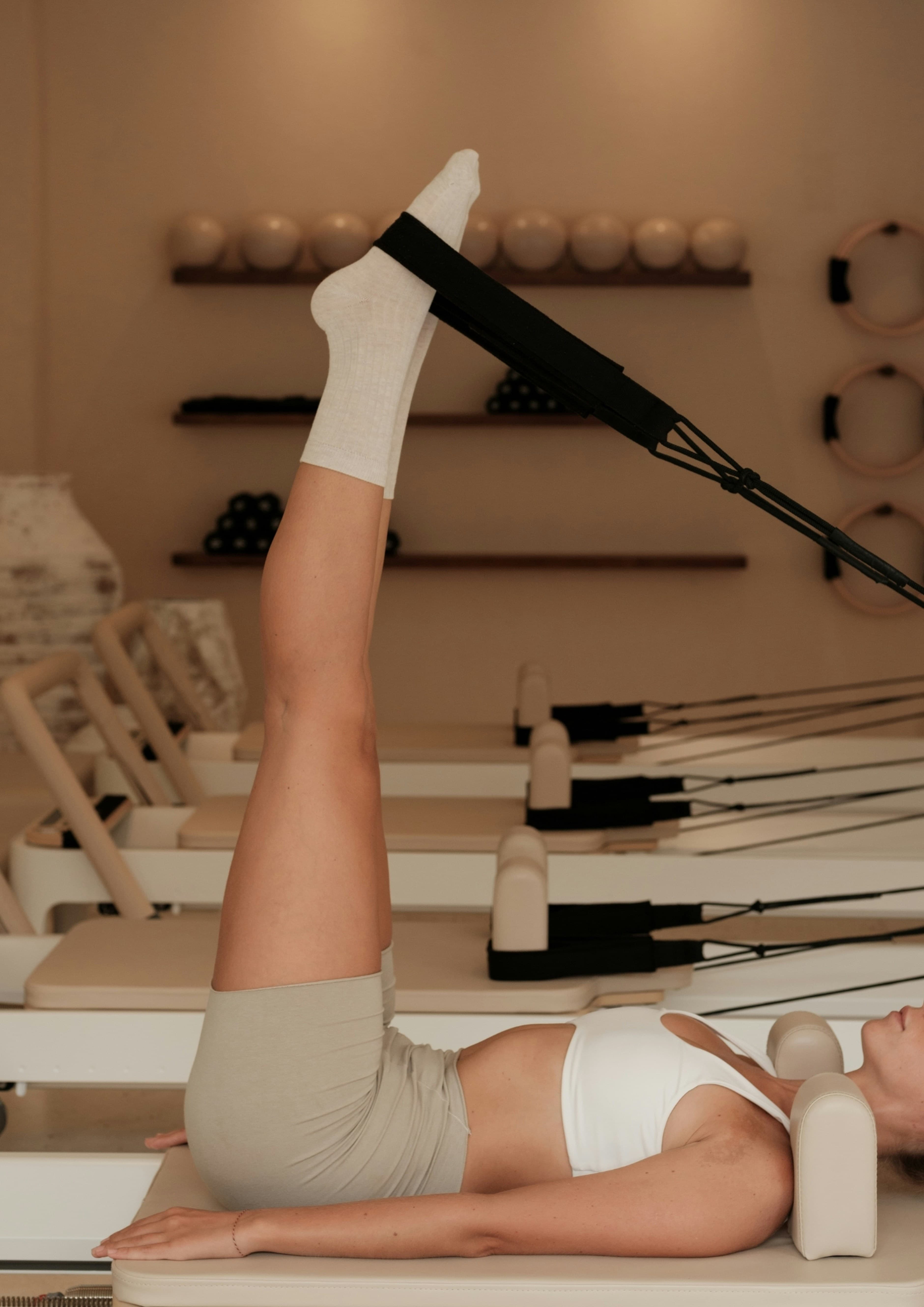
Multiple randomised controlled trials have examined Pilates for arthritis management. Key findings include:
A 2020 systematic review in the Journal of Bodywork and Movement Therapies found that Pilates significantly reduced pain and improved function in people with knee osteoarthritis.
Studies on rheumatoid arthritis show Pilates improves joint range of motion, balance, and quality of life without exacerbating inflammation markers when performed outside of active flares.
The emphasis on proprioception and joint position sense in Pilates directly addresses one of the functional deficits arthritis creates — reduced joint awareness — which contributes to fall risk and movement compensation.
Pilates' emphasis on supporting muscle strength reduces direct joint loading during daily activities, which is the primary mechanism by which exercise reduces OA pain.
Knees
Use a thick mat (10mm) for kneeling exercises. Avoid deep knee flexion beyond comfortable range. Perform footwork on the reformer with spring assistance rather than full body weight. Use a knee sleeve for warmth and proprioception.
Hips
Avoid exercises that require full hip flexion or extreme external rotation beyond your pain-free range. Supine hip work with a small overball between the knees is often more comfortable than standing hip exercises. Avoid high-impact reformer jumping work.
Wrists and hands
Substitute fist-leaning or forearm-supported positions for open-palm quadruped exercises. Use wrist wraps for exercises that require wrist extension loading. Reformer work with loops is often more accessible than mat exercises that require floor hand placement.
Spine
Work within a comfortable range of flexion and extension — do not force through end-range where there is arthritic disc or facet involvement. The neutral spine position that Pilates emphasises is inherently protective for most spinal arthritis presentations.
*Some links on this page go to Amazon. We earn a small commission on qualifying purchases.
A 10mm mat is the most important equipment upgrade for practitioners with arthritis. Standard 4-6mm mats provide insufficient cushioning for kneeling, quadruped (hands and knees), and seated exercises that place direct pressure on arthritic knees, wrists, and hips. The Gaiam Essentials 10mm mat provides enough cushioning to meaningfully reduce discomfort in these positions without creating the instability that very thick foam can cause. The non-slip surface handles perspiration, and the mat is light enough to carry to class without adding physical strain. For practitioners with significant knee or wrist arthritis, a 10mm mat is often the single change that makes floor-based Pilates consistently accessible.
Shop on AmazonFor practitioners with wrist or hand arthritis, a lightweight compression wrist brace during Pilates exercises that require wrist loading — quadruped, planks, push-up positions on the reformer — can meaningfully reduce pain and allow fuller participation. The brace provides proprioceptive feedback that reinforces neutral wrist positioning and reduces the micro-movements that provoke arthritic pain. Look for a design with a palmar stay for support and an open-finger configuration that does not restrict the grip needed for reformer straps. Most practitioners with moderate wrist arthritis find they can participate in exercises they would otherwise avoid with appropriate wrist support in place.
Shop on AmazonA knee compression sleeve worn during Pilates provides warmth, proprioceptive support, and mild compression that can reduce pain and improve joint awareness for practitioners with knee osteoarthritis or inflammatory arthritis. The warmth effect is particularly relevant in studio environments where lying on a cool reformer can stiffen arthritic joints mid-session. Copper Compression's sleeve design is low-profile enough to wear under standard Pilates leggings without bulk, and the graduated compression maintains position through a full class without sliding down. The sleeve is most effective as a complement to appropriate exercise modification — not as a substitute for informing an instructor about joint limitations.
Shop on AmazonThe small Pilates overball is one of the most useful props for arthritis-modified Pilates because it allows practitioners to reduce range of motion and joint loading in exercises without requiring the instructor to redesign the whole class. Placed between the knees in supine exercises, it reduces hip adductor and knee stress while maintaining the activation intent of the exercise. Held in the hands during standing exercises, it provides gentle grip resistance that is appropriate for hand arthritis where larger free weights create excessive joint compression. The 9-inch overball is the standard size for Pilates prop work and fits most practitioners without adjustment.
Shop on AmazonApplying gentle heat to affected joints for 10-15 minutes before a Pilates session reduces stiffness and improves range of motion — a well-evidenced intervention for both osteoarthritis and rheumatoid arthritis (outside of active flares). A microwaveable heat pad allows targeted application to knees, hips, or hands before practice without the impracticality of a hot bath. The warmth effect reduces the viscosity of synovial fluid, making initial movement less painful and allowing a more productive warm-up phase at the start of class. Post-session ice application to any joints that have been loaded is equally appropriate and reduces post-exercise inflammation for practitioners who find they experience soreness after class.
Shop on AmazonIs Pilates good for arthritis?
Yes. Multiple clinical studies support Pilates as beneficial for both osteoarthritis and rheumatoid arthritis. Benefits include improved joint mobility, reduced pain scores, better balance and proprioception, and stronger supporting musculature. The low-impact nature of Pilates and its emphasis on controlled movement make it more accessible than many other exercise forms for people with arthritic joints.
Which type of Pilates is best for arthritis?
Reformer Pilates is often better tolerated than mat Pilates for arthritis because the spring resistance system allows exercises to be performed with less body weight through the joints. The carriage support reduces the need to hold positions that load arthritic knees and wrists, and the spring assistance can reduce the effort required in challenging positions. Mat Pilates is also appropriate with a thick mat and appropriate modifications.
Should I do Pilates during an arthritis flare?
No. During an active inflammatory flare — characterised by significant joint swelling, redness, warmth, and acute pain — rest and medical management take priority over exercise. Structured Pilates should wait until the acute flare resolves. Consult your rheumatologist for specific guidance on exercise during flares.
Age-appropriate Pilates — safe exercises, modifications, and the genuine benefits of practice over 60.
Read → 8 min readEvidence-based Pilates for chronic and acute back pain — what works and what the research says.
Read → 9 min readUse our curated city guides to find the best Pilates studios worldwide.
Explore City Guides →