HealthMarch 2026
Pilates for Runners
Why runners benefit from Pilates — the specific muscles it targets and how to programme it alongside training.
Read → 8 min read
Updated June 2026 · 8 min read
Cycling is one of the most one-dimensional movement patterns in sport. Hours in the same position create predictable muscular imbalances that limit performance and drive injury. Pilates, applied specifically to the imbalances cycling creates, addresses them more directly than general cross-training. Professional cycling teams have integrated Pilates into their training programmes for over a decade — the evidence base is solid and the application is specific.
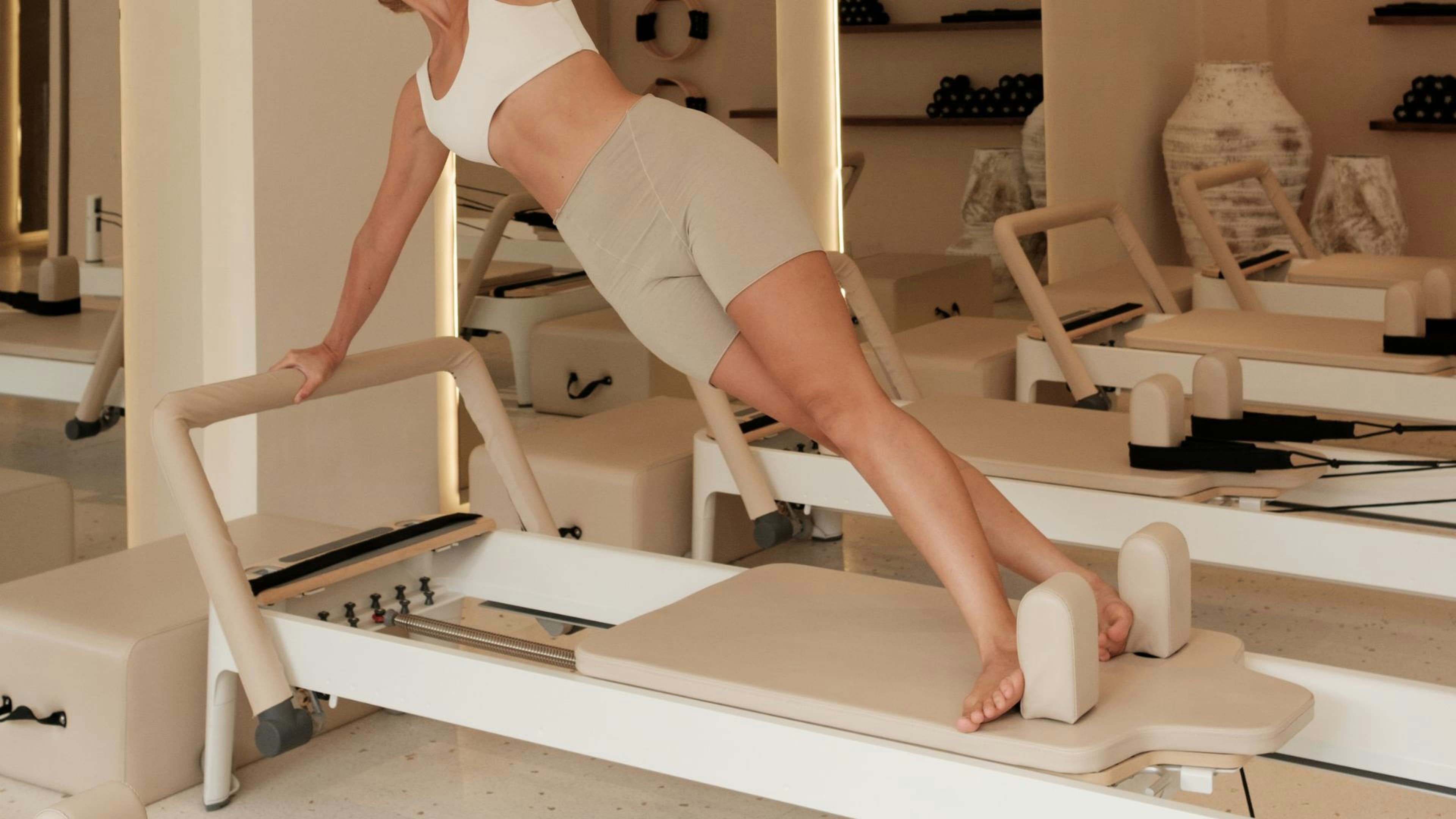
Sustained cycling in the same position creates five specific physical adaptations that reduce performance and increase injury risk if left unaddressed:
Shortened hip flexors
Hours of sustained hip flexion shorten the psoas and iliacus. Shortened hip flexors limit stride length in running, cause anterior pelvic tilt on the bike, and are the most common contributor to lower back pain in cyclists.
Inhibited glutes
The seated position and repetitive hip extension of pedalling gradually deactivates the gluteus maximus and medius. Weak glutes mean less power through the pedal stroke and less pelvic stability, which increases knee and lower back loading.
Thoracic kyphosis
Sustained forward lean stiffens the mid-back into a rounded position that limits breathing capacity, compresses cervical structures, and creates shoulder and neck pain on longer rides.
Weak scapular stabilisers
Supporting upper body weight on handlebars without adequate scapular stability creates trapezius and levator scapulae overuse — the source of the chronic neck-shoulder tension cyclists experience.
IT band tightness
Repetitive knee flexion-extension in pedalling progressively tightens the iliotibial band, leading to lateral knee pain — one of the most common cycling overuse injuries.
Pilates is not generic cross-training for cyclists — it directly targets the imbalances cycling creates:
Hip flexor lengthening
Lunging hip flexor stretches, swan prep, and prone hip extension exercises in Pilates restore hip flexor length and reduce anterior pelvic tilt — directly improving pedalling efficiency and back comfort.
Glute activation
Single-leg bridges, clam shells, and reformer footwork with external rotation emphasis re-activate the gluteus maximus and medius in the pattern needed for the pedal stroke. Studies show measurable improvement in glute activation on the bike within 6-8 weeks of consistent Pilates practice.
Thoracic extension
Swan, spine twist, and thoracic extension over a foam roller or Pilates arc barrel restore the spinal extension range that cycling progressively removes. Improved thoracic mobility directly reduces neck and shoulder pain on the bike.
Scapular stability
Serratus anterior exercises, rowing patterns on the reformer, and prone back extension builds the foundation strength needed to support body weight on handlebars without overloading the neck.
*Some links on this page go to Amazon. We earn a small commission on qualifying purchases.
Cycling creates predictable tightness patterns: the hip flexors shorten from sustained flexion, the IT band tightens from repetitive pedalling, the thoracic spine stiffens from the sustained flexed riding position, and the glutes deactivate from hours of seated loading. The TriggerPoint GRID Foam Roller addresses all four of these patterns efficiently in the 10-15 minutes before a Pilates session or after a ride. The multi-density surface provides more targeted release than flat foam rollers, particularly for the thoracic spine and IT band — two areas where specific pressure rather than broad compression is needed. Used consistently, it maintains the range of motion that Pilates work develops across a full training week.
Shop on AmazonCyclists chronically underactivate their gluteus medius — the hip abductor responsible for pelvis stability in the single-leg stance phase of the pedal stroke. Weak gluteus medius activation leads to pelvic drop, knee tracking issues, and lower back pain on longer rides. A 10-minute resistance band activation sequence before cycling — lateral band walks, clam shells, single-leg bridges with band resistance — is one of the most evidence-supported pre-ride warm-ups available. The Fit Simplify fabric band set provides the progressive resistance needed to take a cyclist from minimal activation through challenging hip stability work as glute strength improves over weeks of consistent practice.
Shop on AmazonThe hip flexor shortening that accumulates over hours of cycling requires sustained static stretching to reverse — a 15-second stretch does not meaningfully lengthen chronically shortened tissue. A looped stretch strap allows 60-90 second holds of the hip flexor, hamstring, and calf — the exact muscles that accumulate tightness through cycling — in supine positions that do not require balance or active muscle engagement. This makes the stretch more effective and more comfortable than standing or kneeling hip flexor stretches after a fatiguing ride. For cyclists who follow rides with Pilates sessions, the strap provides the bridge between the two that prevents Pilates exercises from being limited by post-ride stiffness.
Shop on AmazonCyclists doing post-ride Pilates need a mat that performs when they are sweating. The Manduka PRO's closed-cell surface does not absorb moisture, maintaining grip through an entire post-cycling Pilates session without the slipping that occurs on cheaper mats once sweat saturates the open-cell foam. The 6mm thickness provides meaningful cushioning for hip-bone-prominent side-lying exercises and kneeling positions that are uncomfortable on thinner mats after long time in the saddle has compressed the hip area. The mat's length (180cm) accommodates the longer leg extension exercises that are particularly relevant for cyclists working on hip mobility.
Shop on AmazonA lacrosse or massage ball is more effective than a foam roller for the targeted release cyclists need most: the piriformis (deep hip rotator, compressed during saddle time), the pectoral muscles and anterior shoulder (tightened by the forward lean of the riding position), and the plantar fascia (loaded by foot-intensive pedalling). Rolling the piriformis in a figure-four seated position and the pectorals against a wall before a Pilates spinal extension or shoulder mobility session produces better range of motion outcomes than foam rolling alone. A set of two balls allows bilateral hip release simultaneously, which is practical for time-constrained cyclists.
Shop on AmazonIs Pilates good for cyclists?
Yes, significantly. Cycling creates specific muscular imbalances — shortened hip flexors, weak glutes, tight thoracic spine, and underactive scapular stabilisers — that Pilates directly addresses. Core stability improvements from Pilates translate to a more stable pelvis on the bike, better power transfer, and reduced lower back pain on longer rides.
How often should a cyclist do Pilates?
One to two sessions per week is the effective minimum for cyclists seeking meaningful benefit. One full Pilates session (45-60 minutes) per week combined with 10-15 minutes of targeted activation work before rides produces measurable improvements in core stability and hip mobility within 6-8 weeks of consistent practice.
What Pilates exercises are best for cyclists?
The most relevant exercises address the specific imbalances cycling creates: hip flexor stretching and release, glute activation (clam shells, single-leg bridges), thoracic extension (swan, spine twist), scapular stabilisation, and lateral core stability. These directly counteract the postural and muscular effects of sustained cycling position.
Use our curated city guides to find the best Pilates studios worldwide.
Explore City Guides →