MethodMay 2026
Pilates vs Yoga: Which Is Right for You?
An honest comparison of two movement disciplines that serve different goals.
Read → 9 min read
*Some links on this page go to Amazon. We earn a small commission on qualifying purchases.
The Pilates vs gym debate generates more heat than light. Both approaches work. The right choice depends on your goals, your body, and what you'll actually sustain consistently. This guide compares them honestly across the dimensions that matter — without the tribal loyalty that tends to dominate these discussions.
Pilates
Excellent for functional and stabiliser strength. Reformer spring resistance challenges the core, hips, and shoulders meaningfully. Limited for maximal strength development.
Gym
Superior for maximal strength. Progressive overload with barbells and machines builds muscle mass more efficiently than Pilates.
Verdict: Gym wins for max strength. Pilates wins for functional stability.
Pilates
Consistently improves body composition — reduces waist circumference, increases lean mass in key areas. Lower caloric burn per session limits overall weight loss.
Gym
Higher caloric expenditure per session. Strength training combined with cardio is the most evidence-supported approach for body composition change.
Verdict: Both effective. Combined approach produces best results.
Pilates
Exceptional. Flexibility is integrated throughout every exercise. Mat Pilates specifically develops spinal mobility, hip flexibility, and posterior chain length.
Gym
Minimal flexibility development without dedicated stretching. Most gym programmes neglect mobility entirely.
Verdict: Pilates clearly superior for flexibility.
Pilates
Very low. The emphasis on controlled movement, spinal alignment, and gradual progression makes Pilates exceptionally safe. Appropriate for rehabilitation.
Gym
Moderate to high, particularly with heavy compound lifts performed with poor technique. Injury rates higher in barbell training than in Pilates.
Verdict: Pilates significantly safer, particularly for beginners.
Pilates
Boutique reformer studios: $25-45 per class. Mat classes: $15-25. Home practice: mat $80-200, reformer $300-$3,500+.
Gym
Gym membership: $20-80/month. Personal training: $50-150/session. Equipment (home gym): $500-$5,000+.
Verdict: Gym membership cheaper. Studio Pilates significantly more expensive.
Pilates
Strong evidence for reduced anxiety, improved body awareness, and mindfulness. The concentration required creates a meditative state many practitioners value.
Gym
Well-documented benefits for mood and mental health via endorphin release and confidence from strength gains.
Verdict: Both offer significant mental health benefits, through different mechanisms.
The most common trajectory among serious practitioners is: gym training from their 20s, adding Pilates in their 30s as injury prevention becomes a priority, and eventually shifting predominantly to Pilates as longevity becomes the goal. This trajectory is supported by research on exercise throughout the lifespan — high-impact, high-load training peaks in early adulthood, while movement quality and stability training become progressively more important with age.
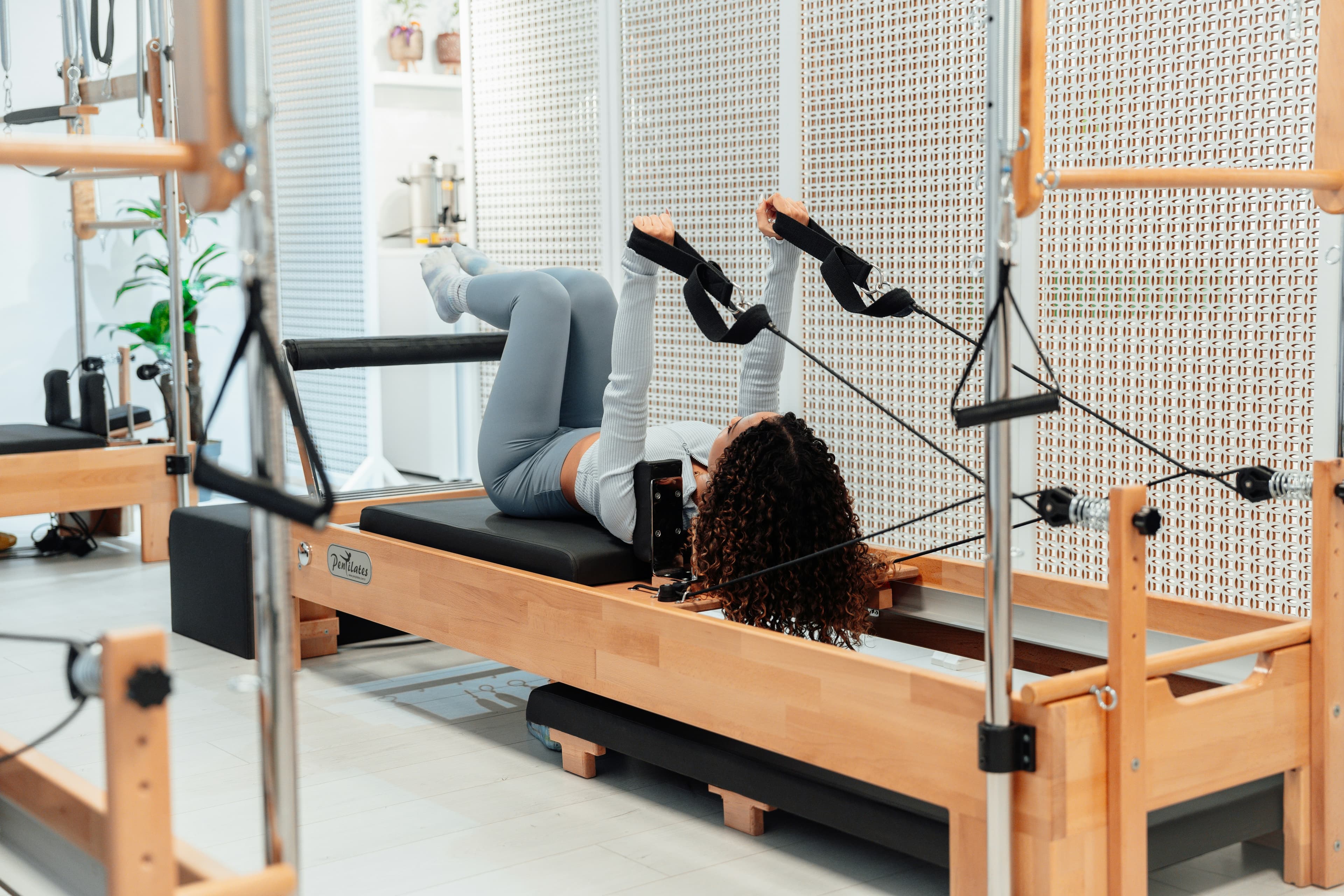
For those who want to combine both, the practical structure is: 2-3 gym sessions per week (strength focus) plus 2-3 Pilates sessions (mobility, stability, body awareness). If you need a home reformer for Pilates work, see our home reformer guide. For home Pilates alongside a gym membership, a quality mat and resistance bands extend your home practice considerably.
Is Pilates better than gym for weight loss?
Gym training (particularly strength training combined with cardio) burns more calories per session than Pilates. However, Pilates produces body composition changes — muscle development in the core, glutes, and stabilisers — that complement gym training well. The most effective approach for weight loss combines both.
Can Pilates replace the gym?
For strength sport goals (powerlifting, bodybuilding), no. For general fitness, health, and longevity goals, Pilates can be a primary training modality. Reformer Pilates provides genuine resistance training stimulus for those who don't pursue maximal strength. Many practitioners replace gym work entirely with Pilates and achieve excellent long-term outcomes.
Is Pilates considered strength training?
Contemporary Pilates, particularly reformer Pilates, is increasingly recognised as a form of resistance training. The spring resistance on a reformer produces meaningful muscular challenge, particularly for the core, hip, and shoulder stabilisers. It won't build maximal strength like barbell training, but it develops the functional strength most people need for daily life and healthy ageing.
Should I do Pilates before or after gym?
If doing both in a single session, Pilates before strength training activates the stabilisers and improves body awareness. If training on separate days, there's no meaningful difference. Many practitioners use Pilates on rest days from gym training — the movement quality focus provides active recovery without competing demands.