EquipmentMay 2026
Best Pilates Mat (2026)
The mat is your most important equipment purchase — five options ranked honestly.
Read → 9 min read
*Some links on this page go to Amazon. We earn a small commission on qualifying purchases.
Few fitness questions attract more wishful thinking than this one. The honest answer is nuanced: Pilates is not a primary weight loss tool, but it is genuinely excellent for body composition. The distinction matters — and understanding it will help you structure your practice to get the results you actually want.
Multiple meta-analyses published between 2020 and 2025 have examined Pilates for body composition. The consistent findings: Pilates produces significant reductions in waist circumference and body fat percentage, and significant increases in lean muscle mass — particularly in the abdominal, gluteal, and hip flexor regions. However, the weight loss effects (scale weight) are modest unless Pilates is combined with caloric management.
This is not a failure of the method. It reflects that muscle is denser than fat. Practitioners who gain muscle while reducing fat often look and feel substantially leaner without the scale moving significantly.
Calorie Estimates · 60-Minute Session (150lb practitioner)
Mat Pilates (beginner)
170–210 kcal
Mat Pilates (advanced)
210–260 kcal
Reformer Pilates (intermediate)
250–350 kcal
Reformer Pilates (advanced/athletic)
350–450 kcal
Running (moderate pace)
480–600 kcal
The body composition changes from Pilates are disproportionate to its caloric burn, and the reason is muscle specificity. Pilates systematically develops the deep stabilising muscles — transverse abdominis, multifidus, pelvic floor, and hip rotators — that most other forms of exercise neglect. These muscles are largely invisible on the scale but highly visible in posture, silhouette, and functional movement quality.
A practitioner who does 3 sessions per week for 12 weeks consistently reports a flatter abdomen, a more defined waist, and a leaner leg profile — changes that are real and measurable even when the scale doesn't reflect them. This is the honest story of Pilates and body composition.
3-4 Pilates sessions per week
This is the minimum threshold for meaningful body composition change. Below 3 sessions per week, the training stimulus is insufficient to produce the muscle development that drives visible change.
Add 2-3 cardiovascular sessions
Pilates plus cardio produces significantly better weight management outcomes than either alone. Walking, cycling, and swimming complement Pilates without creating competing recovery demands.
Prioritise nutrition
No exercise modality overrides nutrition for weight management. Pilates supports a caloric deficit by building muscle (raising resting metabolic rate) but cannot compensate for a sustained caloric surplus.
Use the reformer if accessible
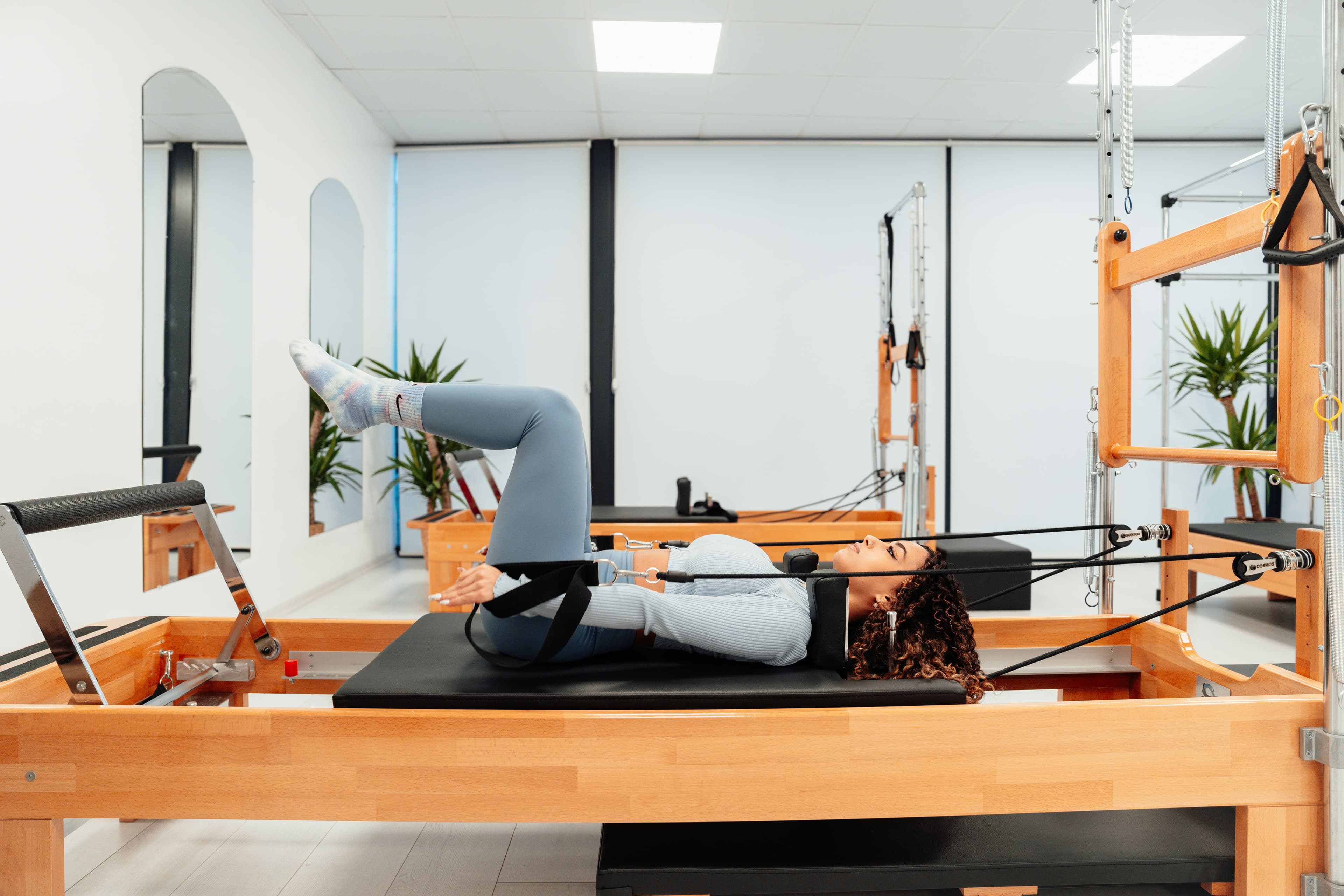
Reformer Pilates burns 15-25% more calories per session than mat work and develops greater total muscle mass due to the spring resistance. If you have access to a reformer — studio or home — use it.
For weight management through Pilates, a quality mat is the starting point. The Manduka PRO mat provides the firm surface needed for the abdominal series and footwork. Adding resistance bands increases the metabolic demand of mat exercises significantly — arm work with bands adds load that mat Pilates alone can't provide.
For serious home practice, the AeroPilates 557 reformer is the most cost-effective way to access the caloric burn of reformer work at home. At $799, it pays for itself within a year for practitioners who would otherwise attend studio classes.
Does Pilates help you lose weight?
Pilates burns 170-250 calories per hour for mat work and 250-450 for reformer sessions — less than running or cycling. However, Pilates consistently changes body composition through muscle development, particularly in the core, glutes, and inner thighs. Many practitioners report significant changes in how their body looks and feels without significant weight change on the scale.
How many times per week should I do Pilates to lose weight?
3-4 sessions per week is the evidence-based minimum for meaningful body composition change through Pilates. For weight loss specifically, combining Pilates with cardiovascular exercise produces better results than either alone.
Is reformer Pilates better than mat Pilates for weight loss?
Reformer Pilates typically burns 15-25% more calories per session than mat work due to the increased resistance and range of exercises. The reformer also loads the body differently, recruiting more muscle groups simultaneously. Both are valuable; reformer adds metabolic intensity.
How long before you see results from Pilates?
Joseph Pilates famously wrote that after 10 sessions you'll feel the difference, after 20 you'll see the difference, and after 30 you'll have a new body. The research broadly supports this — 8-12 weeks of consistent practice produces measurable changes in strength, posture, and body composition.