HealthJune 2026
Pilates for Menopause
How Pilates addresses the physical and psychological symptoms of perimenopause and menopause.
Read → 9 min read
Updated June 2026 · 10 min read
The experience is consistent across thousands of practitioners: you walk into a Pilates session carrying the weight of a difficult day, and you leave feeling distinctly lighter. This isn't placebo — there is clear neurological and physiological mechanism behind it. Understanding why Pilates relieves anxiety helps you structure your practice to maximise these benefits, and distinguishes Pilates from other forms of exercise that may not produce the same calming effect.
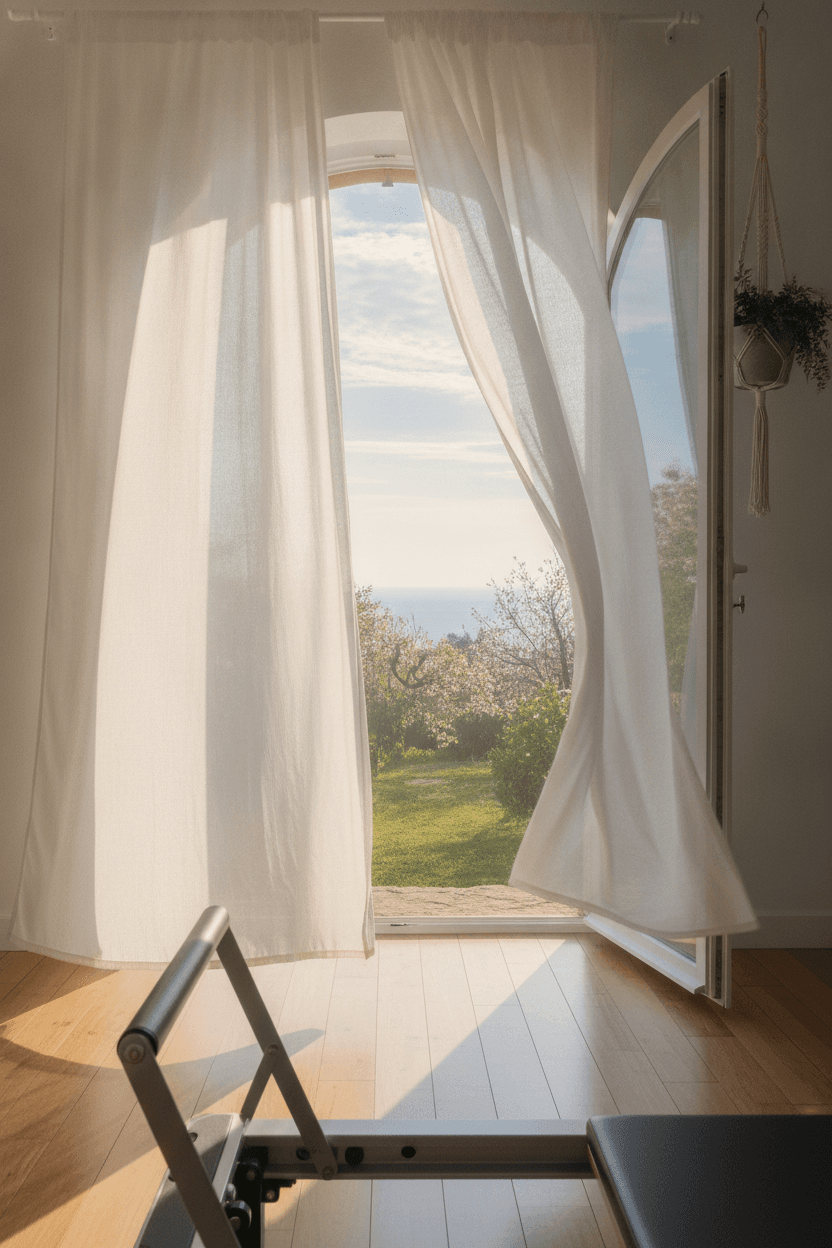
Anxiety is, at its physiological core, a state of sympathetic nervous system dominance — the fight-or-flight response activated inappropriately or disproportionately to the actual threat level. The antidote is parasympathetic activation — the rest-and-digest state. Pilates activates this through at least three distinct mechanisms.
The first is breath. Extended exhalation directly stimulates the vagus nerve — the primary parasympathetic nerve — through its stretch receptors in the lungs and its influence on heart rate variability (HRV). Pilates breath emphasises full exhalation, and research consistently shows that controlled breathing with extended exhalation increases HRV and reduces cortisol levels within a single session. A 2021 study in the International Journal of Environmental Research and Public Health found that Pilates breathing interventions significantly reduced state anxiety compared to unstructured exercise.
The second is attentional focus. Pilates requires sustained attention on internal physical sensation — the position of the pelvis, the engagement of specific muscles, the coordination of movement with breath. This directed internal focus is incompatible with rumination, the repetitive negative thought patterns that sustain anxiety. It is, in effect, a form of mindfulness practice embedded in physical movement.
The third is cortisol reduction through exercise itself. Moderate-intensity exercise consistently reduces cortisol — the primary stress hormone — in the hours following a session. Pilates operates in this moderate-intensity range, producing cortisol reduction without the excess sympathetic activation that high-intensity exercise can trigger in people who are already in a heightened stress state.
Reduced state and trait anxiety
A 2022 systematic review published in Complementary Therapies in Clinical Practice, analysing 10 randomised controlled trials, found that Pilates significantly reduced both state anxiety (anxiety in the moment) and trait anxiety (baseline anxiety levels) across populations including healthy adults, older adults, and people with chronic health conditions.
Improved sleep quality
Anxiety and sleep disruption are deeply linked — anxiety disturbs sleep, and poor sleep exacerbates anxiety. A 2020 study in the Journal of Bodywork and Movement Therapies found that 8 weeks of Pilates significantly improved sleep quality in adults with insomnia, with improvements that persisted at 4-week follow-up.
Reduced depressive symptoms
Depression and anxiety frequently co-occur. Multiple RCTs have found that Pilates reduces depressive symptoms as measured by validated scales (PHQ-9, BDI). The effect size is comparable to that of moderate aerobic exercise, which is established as an evidence-based adjunct treatment for mild-to-moderate depression.
Improved body image and self-efficacy
Pilates consistently improves body image and self-efficacy — the belief in one's ability to manage challenges. Both are protective factors against anxiety. Unlike some fitness disciplines, Pilates does not centre aesthetics or competitive performance, which may partly explain why the improvements in body image are consistent across body types and ages.
These evidence-informed guidelines help you get the most from Pilates as an anxiety management tool.
All forms of regular exercise reduce anxiety — this is well-established. What makes Pilates potentially superior to some alternatives for anxiety management is the combination of physical and attentional engagement. High-intensity exercise (HIIT, running, spin) reduces cortisol in the hours after exercise but can temporarily increase it during the session, which is poorly tolerated by people in a heightened anxious state.
Pilates operates at a moderate intensity that avoids this cortisol spike while simultaneously engaging the attentional mechanisms that reduce rumination. This makes it particularly well-suited to people who find high-intensity exercise activating rather than calming, or those who experience anxiety related to health concerns and prefer a gentler approach to exercise.
Yoga is the most comparable practice — both involve breath-integrated movement, attentional focus, and a non-competitive environment. The evidence base for yoga in anxiety management is slightly larger, but Pilates has been closing this gap in the research literature since 2018. The practical difference is minimal; the best choice is the one you will consistently show up for.
Is Pilates better than yoga for anxiety?
Both Pilates and yoga produce measurable anxiety-reduction, and the research does not clearly favour one over the other. The key variables are the breath integration, the attentional focus on the body, and the absence of competitive or performance pressure — all present in both methods. The best choice is the one you will practise consistently. Some people find Pilates more accessible because it doesn't carry the cultural or spiritual associations that can make yoga feel unfamiliar.
How quickly does Pilates help with anxiety?
Acute anxiety reduction — the calming effect of a single session — is immediate for most people and driven primarily by the breath mechanics. Studies on the acute effects of Pilates on state anxiety consistently show reductions in self-reported anxiety within a single 45–60 minute session. Longer-term trait anxiety reduction — a sustained reduction in baseline anxiety levels — requires consistent practice over 6–8 weeks.
Can Pilates help with panic attacks?
Pilates breathing techniques — specifically extended exhalation — activate the parasympathetic nervous system and can interrupt the physiological cascade of a panic attack. However, Pilates is not a substitute for psychological treatment of panic disorder. If you experience panic attacks, pursue evidence-based psychological treatment (CBT) and discuss with your GP before using exercise as a management strategy alone.
What type of Pilates is best for anxiety?
Mat Pilates in a small group or one-on-one setting with an instructor who emphasises breath and mindful awareness tends to produce the strongest anxiety benefits. High-intensity reformer classes with a fast pace and performance emphasis may actually increase anxiety in some people. The therapeutic Pilates environment — calm, focused, non-competitive — matters as much as the exercises themselves.
Equipment
The quality of your mat affects how easily you settle into focused practice. A firm, non-slip surface removes the micro-distractions of sliding or uneven support — useful when the goal is mental stillness.
Shop on AmazonThe supine thoracic opening on a full-length foam roller activates the parasympathetic nervous system via diaphragmatic stretch and chest opening — a direct physiological intervention for anxiety.
Shop on AmazonFor home practice between sessions. Resistance band Pilates exercises maintain the somatic focus and breath regulation that make studio Pilates effective for anxiety management.
Shop on AmazonPlaced on the abdomen or ribs during breathing exercises, the small ball provides proprioceptive feedback that improves breath awareness during Pilates practice.
Shop on AmazonLight resistance work for home sessions — the rhythmic engagement and release pattern of magic circle exercises builds the mind-body connection that Pilates is most valued for in stress management.
Shop on AmazonUse our curated city guides to find the best Pilates studios worldwide.
Explore City Guides →