EquipmentMay 2026
Best Pilates Mat (2026)
Every major Pilates mat tested and ranked — from budget picks to the professional-grade options used in studios worldwide.
Read → 10 min read
Updated May 2026 · 9 min read
*Some links on this page go to Amazon. We earn a small commission on qualifying purchases.
Founded in 1997, Manduka has spent nearly three decades making the case that a mat is a long-term investment rather than a commodity purchase. The PRO mat — their flagship — remains the reference point for serious practitioners worldwide. But navigating the range requires clarity: the PRO, eKO, PRO Lite, and Superlite serve genuinely different needs, and choosing the wrong one means either overspending on weight you don't need, or undershooting on the density that makes Pilates mat work effective. This guide clarifies the decision.
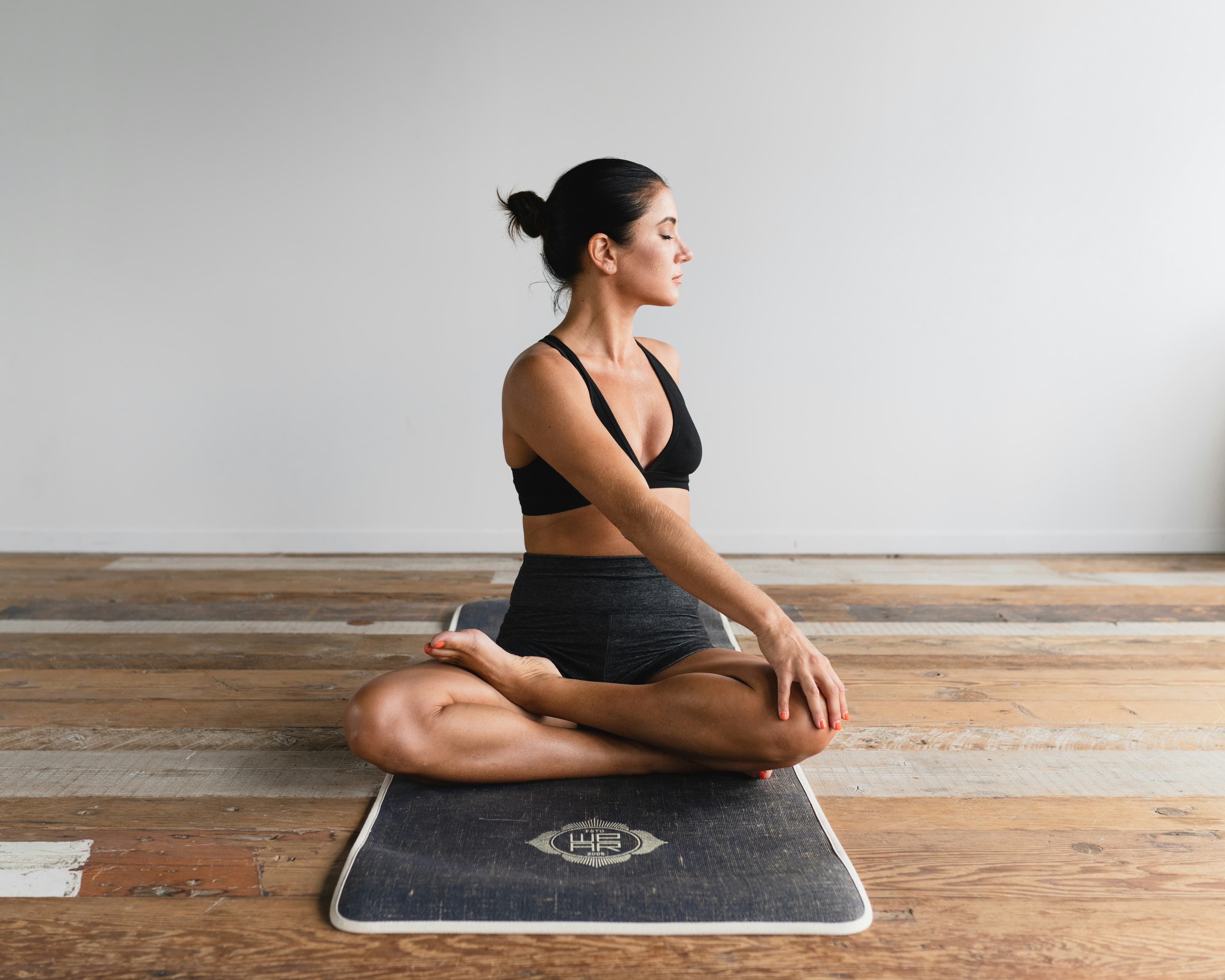
Yoga mat culture has normalised the idea that more cushioning is always better. For Pilates this is wrong. The method involves a significant amount of spinal articulation — rolling through each vertebra individually, lying over the mat with precise positional awareness, and performing exercises like the Hundred and Roll-Up that require the practitioner to sense the floor clearly through the mat surface. Too much cushioning muffles this feedback. The Manduka PRO's 6mm is the sweet spot: protective enough for bone contact, firm enough for clear proprioceptive feedback.
The closed-cell surface of the PRO also matters in a way that is unique to Pilates. Because Pilates involves significant lying work — spine, back of head, sacrum against the mat — the surface you're in contact with matters hygienically in a way it simply does not for standing yoga practice. The PRO's closed-cell top layer prevents sweat absorption, keeps bacteria on the surface where it can be wiped clean, and maintains the structural integrity of the mat over years of use.
Manduka PRO (6mm)
Best for home practice. The definitive mat for serious practitioners — dense, stable, lifetime guarantee.
Manduka eKO (5mm)
Best for grip and natural materials. Natural rubber, eco-certified, slightly more surface traction than the PRO.
Manduka PRO Lite (4.7mm)
Best for studio commuters. Same PRO surface, lighter weight, fits any studio bag. Minor cushioning compromise.
Dedicated home practice, 3+ sessions per week
Manduka PRO (6mm). The weight is irrelevant when it stays at home. The density, lifetime guarantee, and closed-cell surface are worth every dollar.
Studio commuter who carries their mat daily
Manduka PRO Lite (4.7mm). Same surface quality as the PRO at nearly half the weight. The cushioning difference is imperceptible in class.
Eco-conscious practitioner or heavy sweater
Manduka eKO (5mm). Natural rubber provides the most grip of any Manduka mat — the right choice if you run warm or prioritise sustainable materials.
Frequent traveller who uses studio equipment
Manduka eKO Superlite (1.5mm). Folds to a fraction of the size, layers over studio mats or reformer pads, and provides hygiene separation from shared surfaces.
5 Manduka Products · Pilates-Reviewed
The PRO is the mat that serious practitioners buy once and keep for a decade. The 6mm density is the critical spec for Pilates: dense enough to provide clear spinal feedback during rolling exercises, articulation work, and seated positions — without the spongy absorption that thinner mats create against hard floors. The weight (7.5 lbs) is the only meaningful drawback for studio commuters, but for a home practice setup it is irrelevant. The lifetime guarantee is genuine — Manduka replaces defective PRO mats regardless of age. At this price point, the PRO is the benchmark against which every other mat is measured.
Shop on AmazonThe eKO is Manduka's natural rubber mat and it offers a meaningfully different surface from the PRO. The rubber provides slightly more grip — particularly relevant for the standing-adjacent footwork on a mat, or for practitioners who run warm. At 5mm it is one millimetre thinner than the PRO, which most practitioners find indistinguishable in practice. The eco credentials are genuine: natural tree rubber, no PVC, no toxic foaming agents. The eKO is the right choice if you prioritise grip and natural materials over the PRO's closed-cell surface and lifetime guarantee.
Shop on AmazonThe PRO Lite is the answer to the PRO's weight problem. At 4.7mm and 4.6 lbs, it uses the same closed-cell PVC surface as the PRO but in a thinner, lighter construction that fits into most studio bags without issue. The cushioning reduction from 6mm to 4.7mm is minimal — most practitioners cannot distinguish the two surfaces in a mat class. The PRO Lite does not carry the lifetime guarantee of the full PRO, but the warranty is still among the best in the category. For practitioners who attend studio classes regularly and carry their mat on foot, the PRO Lite is the pragmatic choice.
Shop on AmazonThe Superlite is not a standalone practice mat — it is a travel overlay designed to be placed over studio equipment or hotel gym mats. At 1.5mm and under 2 lbs, it folds to the size of a small towel. The natural rubber surface provides excellent hygiene separation from shared studio mats and reformer pads, and the grip layer performs well enough for mat work and stretching. For practitioners who travel frequently and refuse to practise on unfamiliar shared surfaces, the Superlite is the one accessory that solves the problem completely.
Shop on AmazonThe PRO's closed-cell surface is the reason it outlasts every other mat on the market — sweat and bacteria cannot penetrate it. But surface residue still accumulates, and the wrong cleaning products (anything with essential oils or harsh detergents) will degrade the top layer over time. Manduka's pH-balanced spray is formulated specifically for the PRO surface: it removes post-class residue without breaking down the material. A bottle lasts months. If you're spending $120+ on a PRO mat, the cleaning spray is a sensible addition to the initial purchase.
Shop on AmazonManduka PRO vs eKO for Pilates — which is better?
For Pilates specifically, the PRO is the stronger choice for most practitioners. Its closed-cell surface means it does not absorb sweat into the mat body, which keeps it hygienic and extends its life significantly. The 6mm density provides excellent spinal feedback during rolling exercises and articulation work. The eKO is the better choice if you prioritise natural materials and slightly more grip — the rubber surface holds slightly better if you run warm. Neither is wrong; the PRO is the more purpose-built tool for dedicated Pilates practice.
Does the Manduka PRO need to be broken in?
Yes. The PRO ships with a slick surface coating that requires several sessions to break down. Manduka recommends a salt scrub on first use: sprinkle sea salt across the surface, leave for 24 hours, then rinse. This opens the closed-cell surface slightly and significantly improves grip. After the initial break-in, the PRO develops a surface texture that holds well and continues to improve over the first few months of regular use.
Is Manduka worth the price for Pilates?
The PRO mat is the clearest case for premium mat spending in the category. The lifetime guarantee eliminates the replacement cost cycle that affects cheaper mats, which typically degrade within 2-3 years of regular practice. The closed-cell surface, density, and dimensional stability are all superior to mats in the $30-60 range. For a practitioner with a consistent home practice, the PRO pays for itself against the cost of replacing a budget mat every two to three years.
What size Manduka mat is best for Pilates?
The standard Manduka PRO dimensions are 71 inches long by 24 inches wide. For most Pilates practitioners, the standard length is sufficient — classical Pilates mat work is designed for a mat of this length. Manduka offers a long version at 85 inches for practitioners over 6 feet, which provides meaningful additional room for the extended leg positions in the full classical repertoire. The standard width of 24 inches is appropriate for Pilates; a wider mat is unnecessary for the method.
Every major Pilates mat tested and ranked — from budget picks to the professional-grade options used in studios worldwide.
Read → 10 min readThe complete home studio guide — everything you need to replicate the studio experience without reformer-sized budgets.
Read → 12 min readUse our curated city guides to find the best Pilates studios worldwide.
Explore City Guides →