LagreeSeptember 2026
Best Leggings for Lagree
Why buttery fabrics slide on a vinyl carriage, and the compressive pairs that hold.
Read → 8 min read
Updated September 2026 · 8 min read
*Some links on this page go to Amazon. We earn a small commission on qualifying purchases.
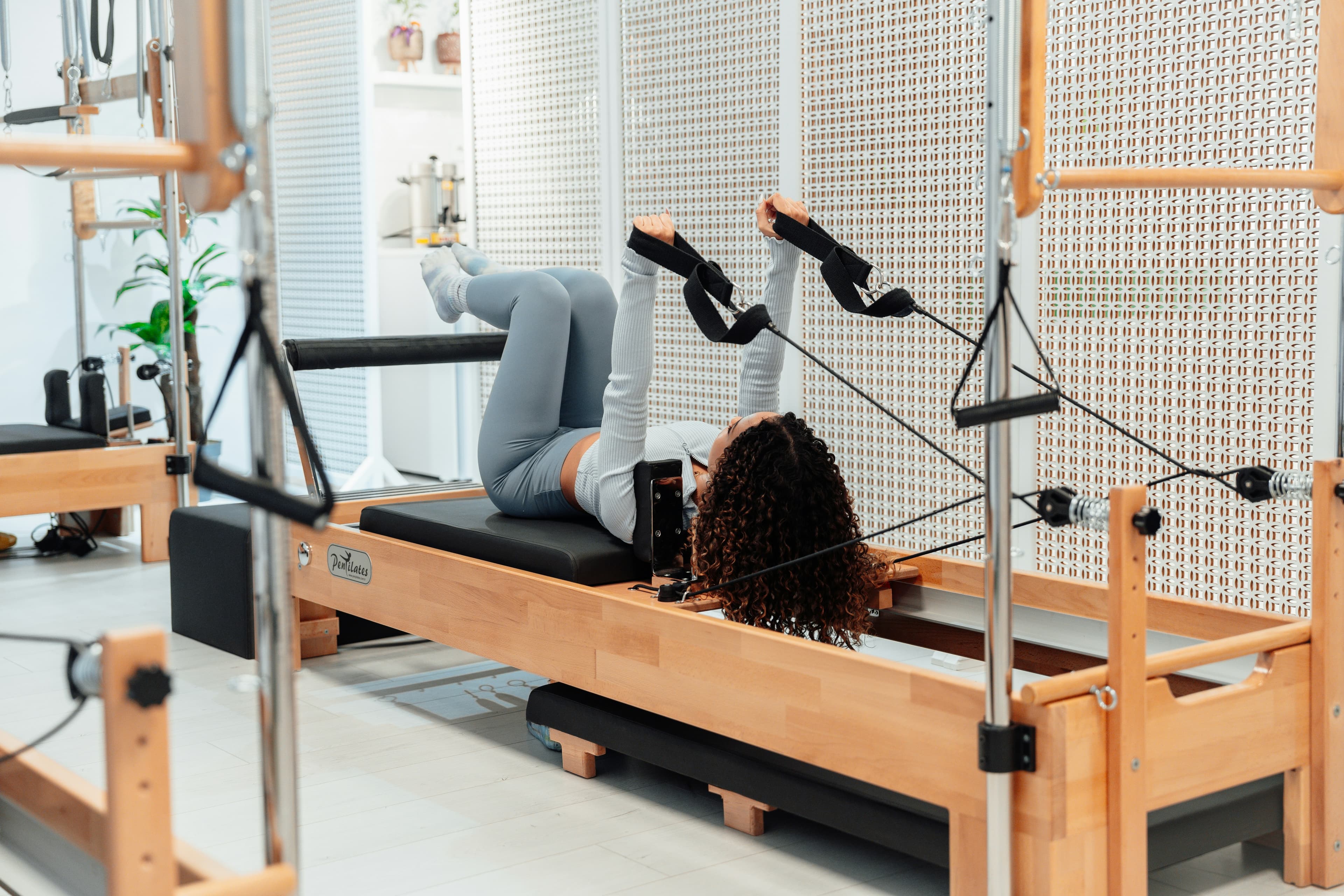
Inseam length decides this category, and the reason has nothing to do with modesty. Lagree puts you in kneeling, seated and side-lying positions directly on a vinyl carriage, and bare skin on warm vinyl sticks at exactly the wrong moment — as well as leaving sweat on a shared surface. Seven to eight inches keeps fabric between you and the carriage everywhere the repertoire goes. Everything else follows the leggings rules.
Quick Picks — At a Glance
6 Pairs · Ranked
Inseam length is the specification that matters here and almost nobody explains why. Lagree involves kneeling, seated and side-lying positions directly on a vinyl carriage, and bare skin on warm vinyl does two unwelcome things: it sticks, which interrupts a transition at exactly the wrong moment, and it leaves sweat on a shared surface. A 7 to 8 inch inseam reaching mid-thigh keeps fabric between you and the carriage in every position the repertoire uses, which a 3 or 5 inch short does not. Beyond length, the requirements match the leggings: firm compression so the short does not need hitching mid-set, a matte rather than buttery face so the leg does not slide, a wide flat waistband that survives inversions, and full opacity under a deep lunge. No side pockets, which catch on handles and cables.
Shop on AmazonA 10 inch inseam finishes just above the knee and is the right answer if your studio's format is heavy on kneeling work — wheelbarrow, kneeling lunges, catfish and the variations built around them. The extra three inches of fabric covers the lower thigh and the area just above the knee, which is precisely the contact zone in a loaded kneel and the region a mid-thigh short leaves exposed. It also spares you the skin-on-vinyl stickiness that makes transitions out of kneeling positions awkward. Practically this is a legging with the calf removed, which is the point: you get thigh coverage and carriage friction without the heat of a full-length pair. Check the hem sits snug, since a loose hem at the knee bunches behind the joint during deep flexion and becomes a distraction.
Shop on AmazonRiding up is the single most common complaint about shorts in any reformer-style class, and it has a specific cause: the fabric hem has less friction against your thigh than your thigh has against the carriage, so every time the leg slides the short travels upward. A silicone gripper band at the hem — borrowed from cycling shorts, where the same problem exists — anchors the leg and stops the migration entirely. If you have abandoned shorts for leggings purely because of this, this is the feature that brings them back. Two things to check: that the gripper is a continuous silicone band rather than printed dots, which do not hold, and that it is not so aggressive that it digs into the thigh across a 45-minute class. Size up if you are between sizes.
Shop on AmazonMen arriving at Lagree in loose basketball shorts discover the problem within about ten minutes: loose fabric slides freely on vinyl, rides to the hip in a lunge, and offers no coverage at all in kneeling positions. A fitted compression short with a built-in liner solves all of it, and the liner means it works as a single garment rather than something worn under a looser short. Look for a mid-thigh to knee length for the same carriage-contact reason as the women's pairs, a matte technical face rather than a glossy competition fabric, and flatlock seams to avoid chafing over a long continuous session. A drawcord plus a wide waistband is worth seeking out, since a waistband alone can slide during inversions. Avoid side pockets, which catch on handles and hold sweat.
Shop on AmazonThe same logic that makes a textured legging outperform a smooth one applies with more force to shorts, because there is less fabric doing the gripping. A ribbed or waffle-faced knit has measurably more mechanical friction against vinyl than a flat jersey, which translates directly into a leg that stays put during kneeling and lateral plank work. Ribbed knits also tend to be more opaque at the same weight, which handles the squat-proof question at the same time — useful in a mirrored studio with deep lunges. The trade-off is heat and a slightly heavier feel, which in a warm room over a long class is a genuine consideration, though noticeably less of one in a short than in a full-length legging. The best compromise in this category for anyone whose main complaint is sliding.
Shop on AmazonThree or four classes a week means three or four pairs, and multipacks are how you get there without spending a class pack on clothing. The mid-market has largely converged on the right specification — high waistband, 7 or 8 inch inseam, no pockets — so a two or three pair pack often ticks the important boxes. Two checks on arrival. Do the daylight stretch test for opacity, since sheerness is where budget shorts most commonly fail and a mirrored studio is unforgiving. And check the waistband is a wide flat band rather than a thin elasticated casing, which rolls the first time you invert. Expect compression to soften within six to nine months of hot, sweaty use rather than lasting years. Wash cold, air dry, and keep one better pair for the classes where you want certainty.
Shop on AmazonCan you wear shorts to Lagree?
Yes, provided the inseam is long enough. The constraint is not modesty but contact: Lagree uses kneeling, seated and side-lying positions directly on a vinyl carriage, and bare skin on warm vinyl sticks during transitions and leaves sweat on a shared surface. A mid-thigh biker short with a 7 to 8 inch inseam keeps fabric between you and the carriage in every position the repertoire uses. Short 3 or 5 inch running shorts and loose gym shorts are the wrong choice for both reasons, and loose fabric also slides freely on the carriage.
What inseam length is best for Lagree?
Seven to eight inches, reaching mid-thigh, is the sweet spot for most formats — enough coverage for kneeling and seated carriage work without the heat of a full-length legging. Go to ten inches if your studio's format is heavy on kneeling sequences, since the extra length covers the lower thigh and the area just above the knee, which is exactly the contact zone in a loaded kneel. Below about five inches you will have skin on vinyl in several positions, which is the thing the length is there to prevent.
Why do my shorts ride up during Lagree?
Because the hem has less grip on your thigh than your thigh has on the carriage. Every time the leg slides across the vinyl, the short travels upward rather than moving with you. A silicone gripper band at the hem — the same solution cycling shorts use for the same problem — anchors the leg and stops the migration. Firmer overall compression helps too, since a loose short has more freedom to move. If a pair rides up in the first class, it will ride up in every class; no amount of wearing in fixes it.
Shorts or leggings for Lagree?
Both work, and the choice mostly comes down to studio temperature. Leggings give maximum carriage coverage and friction, which is why they are the default. Shorts in the 7 to 10 inch range give nearly all of the coverage that matters — the thigh — while venting the calf, which is a real advantage in a hot studio. What does not work is a short inseam or anything loose. If you are choosing one to start with, leggings are the safer purchase; shorts are the upgrade once you know your studio runs warm.
Use our curated city guides to find the best Pilates studios worldwide.
Explore City Guides →