Equipment GuideMay 2026
Best Home Pilates Reformer (2026)
The best home reformers at every price point — from entry-level to studio-grade.
Read → 10 min read
Updated September 2026 · 9 min read
*Some links on this page go to Amazon. We earn a small commission on qualifying purchases.
An earlier version of this guide said the AeroPilates 287 was the only genuine reformer under $500. That was too narrow: a fresh check against live Amazon listings turned up a real tier of generic-brand full reformers — WINDFOOT and DWKWE — that use actual coil-spring or spring-and-cord carriage resistance, not just elastic cords. We've rebuilt this guide around all three real options: two genuine spring reformers from unfamiliar brands, and the AeroPilates cord machine from an established one. None of them is equivalent to a $2,000+ studio-grade machine, but under $500, this is the honest, complete picture of what's actually for sale.
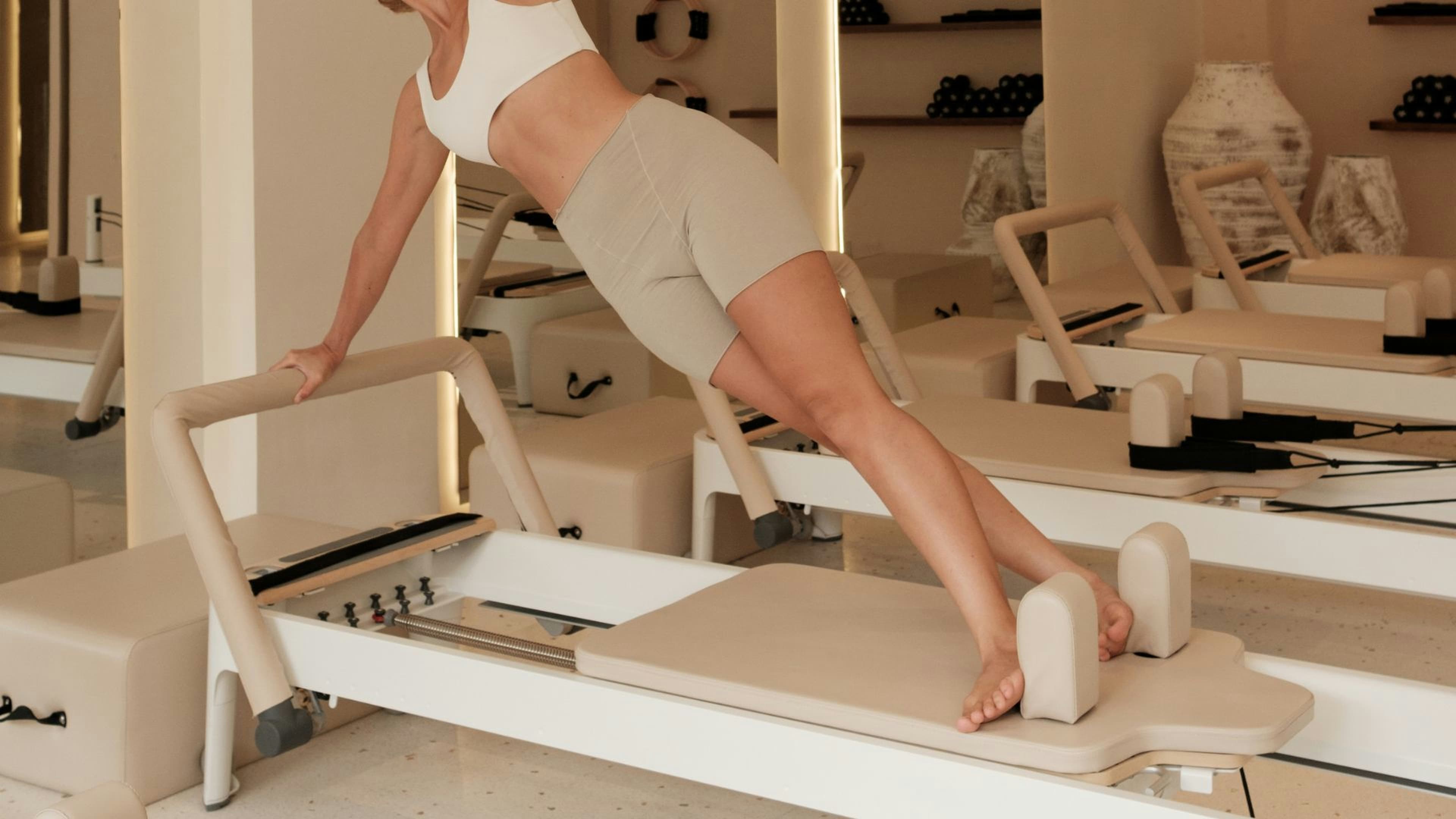
Studio reformers use coil springs — traditionally several springs of varying weights. The resistance builds progressively through the movement arc: heavy at full extension, lighter mid-movement. This progressive tension is integral to how classical Pilates exercises feel and function, and it is what instructors are referring to when they cue resistance during footwork and long-box work.
Under $500 there are now two real categories, not one. The DWKWE and WINDFOOT use genuine spring (or spring-plus-latex) resistance in an actual carriage-and-rail frame — closer in mechanism to a studio reformer than a cord machine is. The AeroPilates 287 uses elastic cord resistance instead, which is more linear and less progressive through the movement arc, from a brand with a long, established track record.
The tradeoff is brand, not mechanism: WINDFOOT and DWKWE are generic or dropship sellers with no instructor recognition and no long warranty history — we can vouch for what the current listing states, not for how the machine holds up in year three. AeroPilates has the opposite tradeoff: a real brand, but a resistance system that isn't springs. Set your priority — spring feel or brand trust — before choosing.
Four buying criteria
Resistance type
Confirm whether a listing uses coil springs, spring-plus-cord, or cord alone before buying — generic listings don't always state this clearly in the title, and it's the single biggest factor in how the machine will feel.
Frame material and weight capacity
PAETA states a 400lb-rated carbon steel frame; DWKWE and WINDFOOT are lighter-duty metal frames. Check the current listing's stated capacity against the intended user's weight rather than assuming parity across brands.
Foldability and setup time
WINDFOOT ships roughly 90% pre-assembled with a 5–10 minute setup; AeroPilates markets a fold-flat design. Confirm folded dimensions and setup time on the current listing rather than a figure quoted elsewhere.
Seller and brand history
WINDFOOT, DWKWE and PAETA are generic or single-product third-party brands with no track record among instructors. That doesn't mean the machine is bad — it means you're relying on the listing and reviews rather than an established brand's history.
Quick Picks — At a Glance
WINDFOOT Foldable Pilates Reformer w/ Jump Board
Best pre-assembled genuine reformer under $300
4 Verified Reformers · Honestly Reviewed
A note before anything else: an earlier version of this guide claimed there was exactly one genuine reformer under $500 and that it used cord resistance. That was too narrow — a fresh check against live Amazon listings turned up a real tier of budget, generic-brand full reformers with actual carriage-and-rail spring construction. The PAETA 86" is the strongest of them: a reinforced carbon steel frame rated to 400lb, dual resistance combining springs and cords, adjustable shoulder rests, and a stated 10,000+ use durability test, shipped with its own box. PAETA is not an established Pilates equipment maker — there's no instructor-recognized track record and no long warranty history to point to — but this is a genuine spring-and-cord carriage reformer, not a cord-only toy, and it is currently sold live on Amazon at $439.99.
Shop on AmazonThe DWKWE is a real, currently-sold Amazon listing at $299.99: a reinforced metal frame reformer with a height-adjustable footbar, a dual resistance system combining springs and latex resistance, and a jump board and headrest included. Sold by a third-party seller (Jun's Wonderful Store) rather than an established Pilates brand, so treat build-quality and longevity claims with appropriate caution — but this is a genuine carriage-and-rail machine with real spring resistance, not a cord-only unit, at under $300.
Shop on AmazonThe WINDFOOT is the cheapest genuine spring-based full reformer we could verify as a live Amazon listing, at $295.99. It ships roughly 90% pre-assembled with a stated 5–10 minute setup, includes a padded rebounder for a cardio option, and has a non-slip leather surface with high-density padding. Like the DWKWE, it's a generic dropship brand rather than an established name, so we can't vouch for long-term durability or after-sale support the way we could for Balanced Body or Merrithew. It is a real reformer, though, not a cord machine dressed up as one.
Shop on AmazonThe AeroPilates 287 is a genuine, live Amazon listing at $359 from an established home-fitness brand with a long track record — a real advantage over the generic-brand spring reformers above if brand reliability matters more to you than resistance type. It uses elastic cord resistance rather than coil springs, a real and meaningful difference from a studio machine, and the brand markets it around a fold-flat design, though we could not independently verify exact folded dimensions or weight capacity for the current listing. If you want spring resistance specifically, the PAETA or DWKWE above are the honest answer at this price; if you'd rather have brand history than springs, this is it.
Shop on AmazonThis is not a reason not to buy — it is important context for realistic expectations.
Is there a genuine spring-based Pilates reformer under $500?
Yes. The PAETA 86" Dual Resistance ($439.99), DWKWE 88" ($299.99) and WINDFOOT ($295.99) are all real, currently-sold, full carriage-and-rail reformers with genuine spring or spring-plus-cord resistance under $500. They come from generic or dropship brands rather than established Pilates equipment makers like Balanced Body or Merrithew, so treat brand track record and warranty support with appropriate caution — but the machines themselves are real spring reformers, not toys.
Is a $359 Pilates reformer worth it?
Yes, for the right person: someone testing reformer Pilates, someone with a small budget who wants to practice at home, or someone supplementing studio sessions. Not worth it if you have extensive studio experience and will find the cord feel frustrating — in that case, one of the generic-brand spring reformers above may suit you better.
What is the difference between AeroPilates and these budget spring reformers?
AeroPilates uses elastic cords and comes from an established home-fitness brand with a long track record. The WINDFOOT, DWKWE and PAETA use genuine coil-spring or spring-and-cord resistance — closer in mechanism to a studio reformer — but come from generic or dropship brands with no instructor recognition and unclear long-term durability. Neither category is equivalent to a $2,000+ machine from Balanced Body or Merrithew.
Should I buy a budget reformer or just go to a studio?
For most beginners, 3–6 months of studio sessions before buying any home equipment is the better investment. A budget reformer makes sense for practitioners who cannot access a studio or who want to supplement regular sessions.
The best home reformers at every price point — from entry-level to studio-grade.
Read → 10 min readWhich reformer to start on — and what features actually matter in your first machine.
Read → 9 min readOur city guides cover the best Pilates studios worldwide.
Explore City Guides →