BeginnersMay 2026
Beginner's Guide to Reformer Pilates
What to expect from your first reformer class and how to prepare.
Read → 8 min read
Updated May 2026 · 9 min read
*Some links on this page go to Amazon. We earn a small commission on qualifying purchases.
When you start Pilates, the equipment question is genuinely confusing. Studio classes require grip socks. Home practice needs a mat. But once you look further, the range of available equipment — rings, bands, foam rollers, chairs, towers — can feel overwhelming. This guide cuts through it: here is what to buy first, what to add once you have a consistent practice, and what to skip entirely when you're starting out.
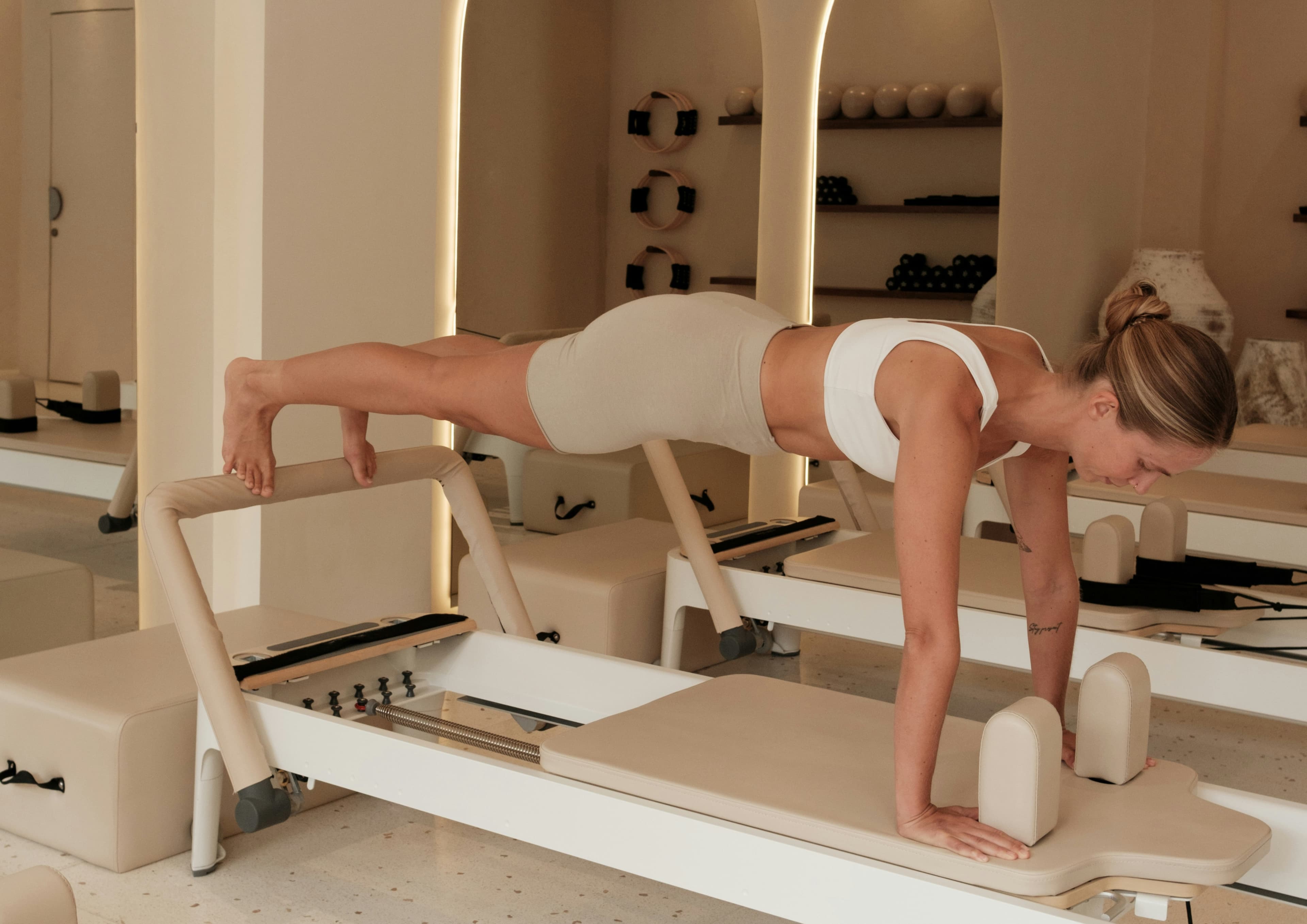
For studio reformer classes
Grip socks are the only equipment requirement. Everything else is provided by the studio. Buy two pairs before your first class.
For studio mat classes
Studios provide mats, but most regular practitioners prefer their own. Grip socks are also useful. No other equipment is needed initially.
For home mat practice
A firm mat, a resistance band, and a Pilates ring covers the full classical mat repertoire with variations. Add a foam roller once you're practising regularly.
What to skip as a beginner
Foam rollers, stability balls, balance boards, and large apparatus. Learn the core movements first. Equipment purchased before building a practice habit typically gathers dust.
5 Products · Beginner-Tested
A quality mat is the single most important Pilates purchase. The Manduka PRO is denser and firmer than standard yoga mats — essential for Pilates, where a spongy mat undermines spinal articulation exercises and destabilises footwork. The 6mm thickness cushions the spine adequately without compromising the grounded feeling that Pilates requires. The surface has appropriate grip without being overly sticky. Crucially, it will last a decade with regular use, making the upfront cost genuinely economical over time.
Shop on AmazonGrip socks are required at virtually every reformer studio and strongly recommended for mat classes. ToeSox are the industry standard — individual toe pockets improve proprioception and grip on the footbar, and the quality holds up to intensive regular washing. Buy two pairs immediately so you always have a clean pair available. Don't underestimate this purchase: studios often refuse entry without grip socks, and going to a class without them wastes your time and money.
Shop on AmazonA set of TheraBand long flat bands in light, medium, and heavy resistance opens up a significant range of mat-based Pilates exercises that bridge between bodyweight work and reformer-level challenge. Wrap the light band around your feet for leg press and footwork variations; use the medium for arm work and stretching; progress to heavy as your strength develops. This is the piece of equipment that most closely mimics reformer spring resistance during home mat practice.
Shop on AmazonThe Pilates ring (magic circle) is a signature piece of the method — an 13-inch flexible ring with padded handles used for inner thigh work, arm exercises, and adding isometric resistance to mat sequences. The STOTT ring has the correct firmness: enough resistance to be challenging without being so stiff it's unusable for beginners. Lighter than it looks, takes up almost no storage space, and adds considerable variety to a home mat practice. Start using it once you've established a basic mat routine.
Shop on AmazonBalanced Body is the most respected equipment brand in the professional Pilates world — their starter set containing a mat, resistance band, and ring is the highest-quality beginner bundle available. Each individual item is better than most standalone products at comparable price points. The mat is appropriately firm, the band is correctly calibrated, and the ring has the right resistance. For a beginner who wants to buy once and not revisit equipment decisions for years, this bundle is the most efficient path.
Shop on AmazonHow much should I budget for a Pilates starter kit?
A practical beginner kit — quality mat, grip socks, resistance band set — costs $150–200 total if you buy individual components selectively. The Balanced Body bundle offers similar quality in a single purchase at a comparable price. A budget version (cheaper mat, generic bands) can be assembled for $60–80 but may need replacing sooner.
Do I need a special Pilates mat or can I use a yoga mat?
A yoga mat works initially, but a dedicated Pilates mat (firmer, slightly less grippy) is meaningfully better for the method. Pilates involves sustained lying on the mat during spinal exercises where a spongy yoga mat undermines the feedback you need to understand your spine's position. Manduka PRO and Gaiam Performance are the two best crossover options that work for both.
What's the most important piece of equipment to buy first?
Grip socks if you're attending a studio — studios will turn you away without them. A quality mat if you're starting home practice. Everything else is secondary until you have a consistent practice habit established.
Can I start Pilates without any equipment at all?
Yes — if you're taking studio classes, the studio provides everything except grip socks. If you're starting with online classes at home, a firm mat (even a borrowed yoga mat) is sufficient for the beginner-level mat sequence. Equipment adds variety and challenge; it isn't required to begin.
Use our curated city guides to find the best Pilates studios worldwide.
Explore City Guides →